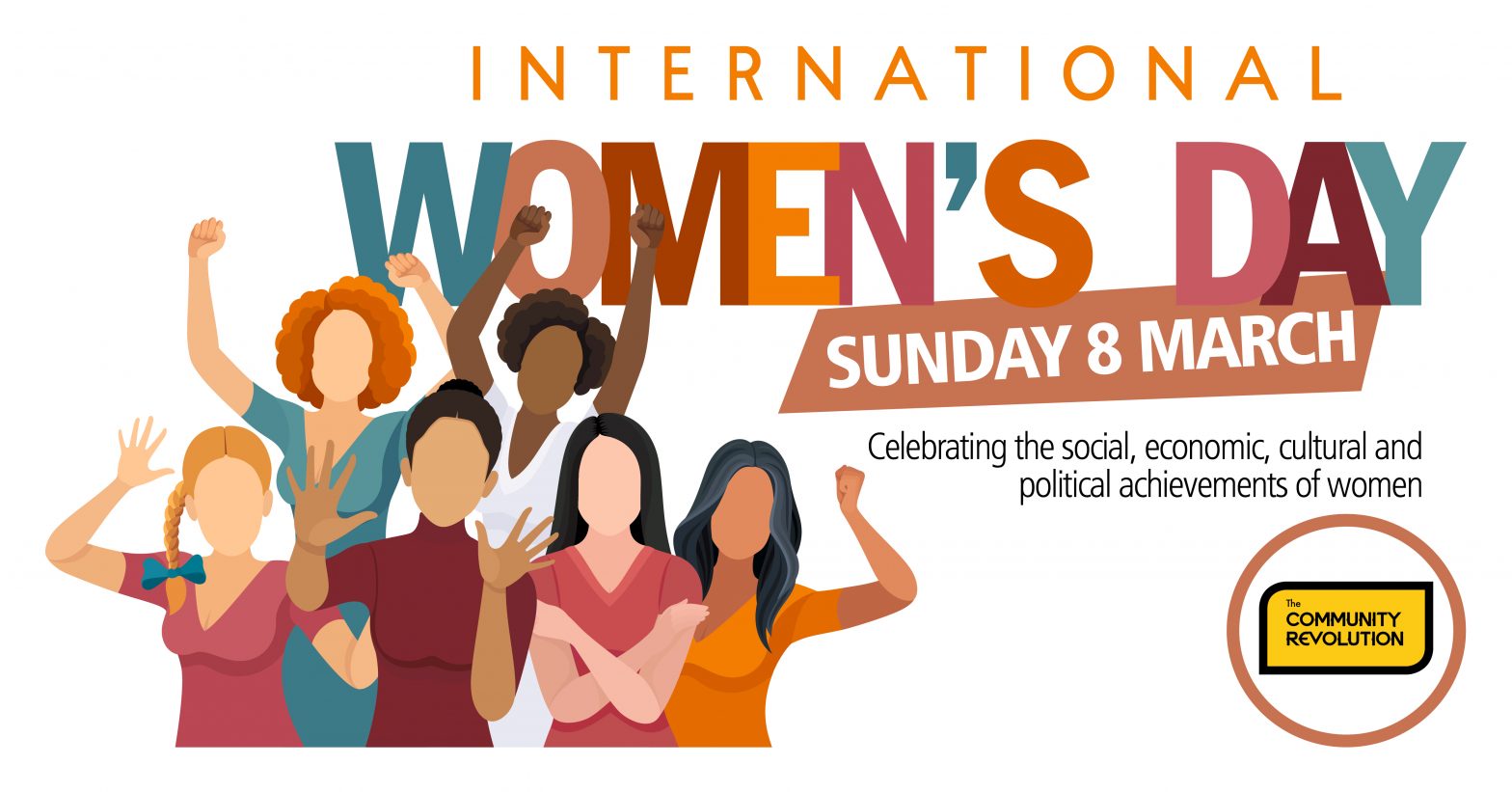
“When we give, we gain.” This year’s International Women’s Day (IWD) theme, set by the official campaign, is a profound invitation to action, challenging us to translate symbolic celebration into tangible progress for gender equality. Simultaneously, the UN Women’s Day theme, “Rights. Justice. Action. For ALL Women and Girls,” frames the political mandate for this global movement.
But what, precisely, is the most crucial ‘Give’ required right now to achieve this vision of justice and rights?
At The Community Revolution (TCR), our work across Africa and the UK has highlighted one stark and universal truth: the fundamental right to speak, organise, and participate is being silenced by a systemic global threat, Technology Facilitated Sexual Violence (TFSV). This International Women’s Day, we argue that digital self-defence, active bystandership, and survivor-centred support are the essential Gives required for women worldwide to truly Gain and maintain their voices, fulfilling the dual vision of the IWD and UN Women campaigns.
The problem: When technology becomes a Weapon of Silencing
TFSV, a broad term encompassing cyber harassment, doxing, non-consensual sharing of intimate images, and sex tortion, is not merely an online nuisance; it is a political weapon.
A recent TCR analysis, based on the work of the African Women’s Development Fund (AWDF), confirmed that the core driver of this violence is the desire to “silence women, remove their voice, and take away their power“. It is a digital-age recreation of offline patriarchal systems, deployed most often as a backlash against women making progress in politics, business, and activism across Africa.
Crucially, the harm is compounded by intersectionality. As our research found, the abuse is particularly severe for marginalised groups, including women with disabilities, queer people, and religious minorities. The trauma of TFSV is often unrecognised by authorities, trivialising the emotional and psychological toll.
The case study: Digital self-defence as the mandatory ‘Give’
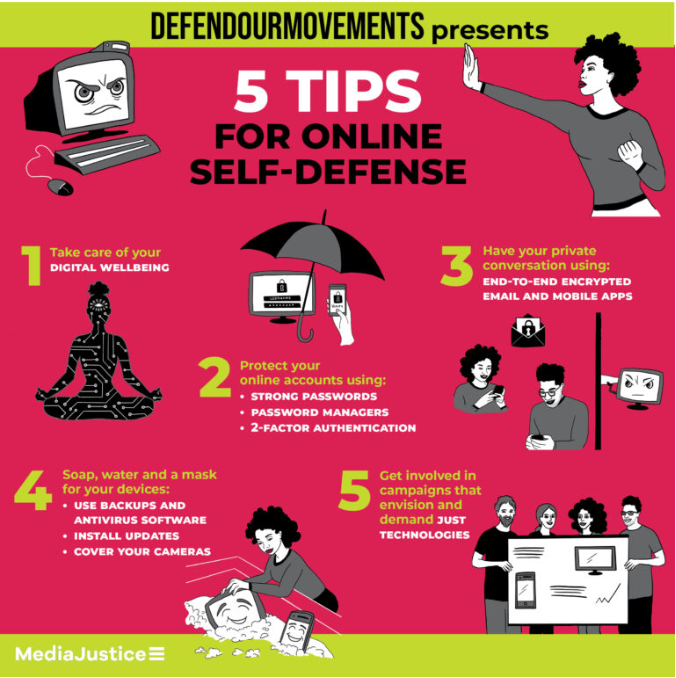
TCR’s work with our African partners, including those in Ghana and Kenya, shows that digital empowerment must begin with digital safety. When law enforcement lacks the capacity to respond to online violence, self-defence is no longer optional, it is mandatory.
Our strategic response, informed by the TFSV Report, requires an immediate ‘Give’ in two key areas:
- Digital self-defence: We are integrating mandatory training modules into our digital literacy programmes. These modules focus on practical tools and knowledge that equip women to identify, prevent, and respond to TFSV, helping them protect their digital space.
- Active bystandership: This is the simplest but most powerful collective ‘Give’. It promotes the act of standing up for victims targeted online, shifting the burden from the individual woman to the community.
These actions form the concrete foundations of The Community Revolution’s digital thematic area, ensuring that our work is not just about skills but about safety and sustained participation.
The Art of Resistance: A creative ‘Give’
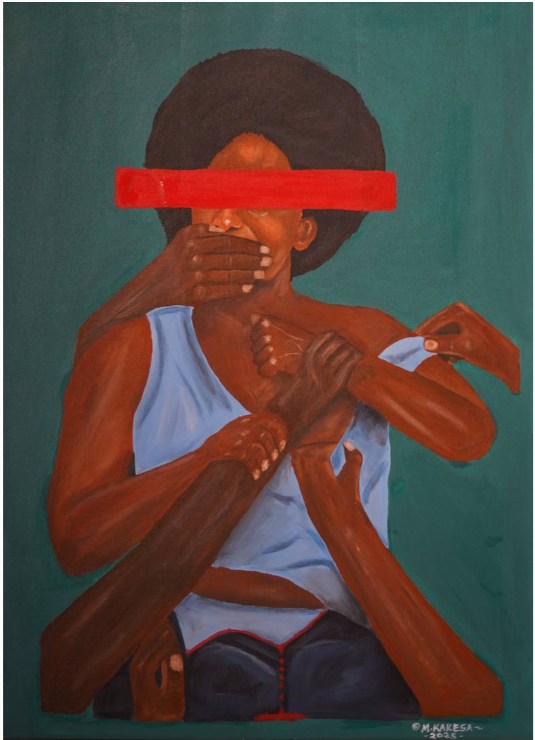
Beyond data and policy, the movement needs a creative soul. We are actively exploring a collaboration with Nairobi-based visual activist and artist, Mary Kakesa (Kakesa Arts), whose powerful work focuses on feminism, social justice, and visual storytelling.
Mary’s art, often based on the lived experiences of survivors of gender-based violence, is a potent form of resistance. It forces the viewer to confront the uncomfortable reality of TFSV, acting as a universal form of active bystandership that refuses to look away.
Her work demonstrates how art, as a universal language, can become a powerful ‘Give’ of accessible, trauma-informed awareness. This creative resistance is vital to shifting the mindsets that perpetuate digital harm and is the perfect counterpoint to the analytical findings of our research.
The global application: What we all ‘Gain’
The ultimate ‘Gain’ from this focus on digital self-defence is the normalisation of the Survivor-Centred Approach and Trauma-Informed Care. This is a non-negotiable principle for effective intervention, prioritising the physical and emotional safety of the survivor above all else.
This learning, drawn from the vital work of African feminist organisations, must be applied everywhere. It underpins our commitment to impact and justice and guides how we support partners across the world.
The same values inform our support for local Voluntary, Community, and Social Enterprise (VSCE) partners here in the UK. For instance, the principles of empowering women to safely navigate systemic challenges are central to the work of the Nottingham Refugee Forum and their Pamoja Women’s project, which assists women of all nationalities in rebuilding their lives.
Conclusion and Call to Action
On International Women’s Day 2026, the question is not what we celebrate, but what we are willing to sacrifice, what we are willing to Give, to accelerate change. The ‘Give to Gain’ movement demands that we invest our resources, our voice, and our platforms into building safety. By championing digital self-defence and survivor-centred care, The Community Revolution is ensuring that the ‘Gain’ is a truly equitable digital public sphere where all women can be heard.
What will you give to gain gender equality this year?
Watch this space: We are excited to share more of our exploration with Mary Kakesa (Kakesa Arts) in the coming months, which promises to bring a powerful visual dimension to our fight for digital justice.