Introduction: Honouring heritage, defining a future
What does a cultural celebration, first observed in Los Angeles in 1966, have to do with sustainable food systems in Ghana, community empowerment in Nairobi, or the vibrant Black movement in Salvador, Brazil? The answer lies not just in the dates, 26th December to 1st January, but in the seven principles that underpin the festival of Kwanzaa. Rooted in the Swahili phrase matunda ya kwanza (‘first fruits’), Kwanzaa’s Nguzo Saba (‘seven principles’) are an empowering philosophy of collective action.
This feature explores how these seven principles Unity, Self-Determination, Collective Work, Cooperative Economics, Purpose, Creativity, and Faith, provide a powerful, unifying philosophy. It is a universal bridge that connects the African diaspora to the continent, driving the collective work needed for social and economic justice, and aligning perfectly with The Community Revolution’s mission for a sustainable future.
The Nguzo Saba: A cultural framework for the UN 2030 Agenda’s five Ps
The enduring wisdom of the Nguzo Saba offers a potent cultural foundation for achieving the UN’s 2030 Agenda for Sustainable Development, aligning with the five pillars of People, Planet, Prosperity, Peace, and Partnership.
- People (Dignity and Equality): Principles like Umoja (Unity) and Ujima (Collective Work) actively champion social justice and equality, ensuring the development work is inclusive and focused on the needs of all community members.
- Planet (Protection of Resources): Kuumba (Creativity) is intrinsically linked to environmental stewardship, challenging us to innovate and “leave our community more beautiful and beneficial than we inherited it”, a direct call for climate action.
- Prosperity (Economic Growth): Ujamaa (Cooperative Economics) provides a foundational model for sustainable, community-owned wealth creation, directly addressing the need for equitable and lasting economic growth.
- Peace (Just Societies): Kujichagulia (Self-Determination) and Imani (Faith) create the foundation for building strong, just, and inclusive communities capable of determining their own future and challenging systemic injustice.
- Partnership (Global Solidarity): The entire festival, and its principles, act as a bridge for global solidarity, strengthening the essential Partnerships between the diaspora and the continent required to mobilise the full resources for development.
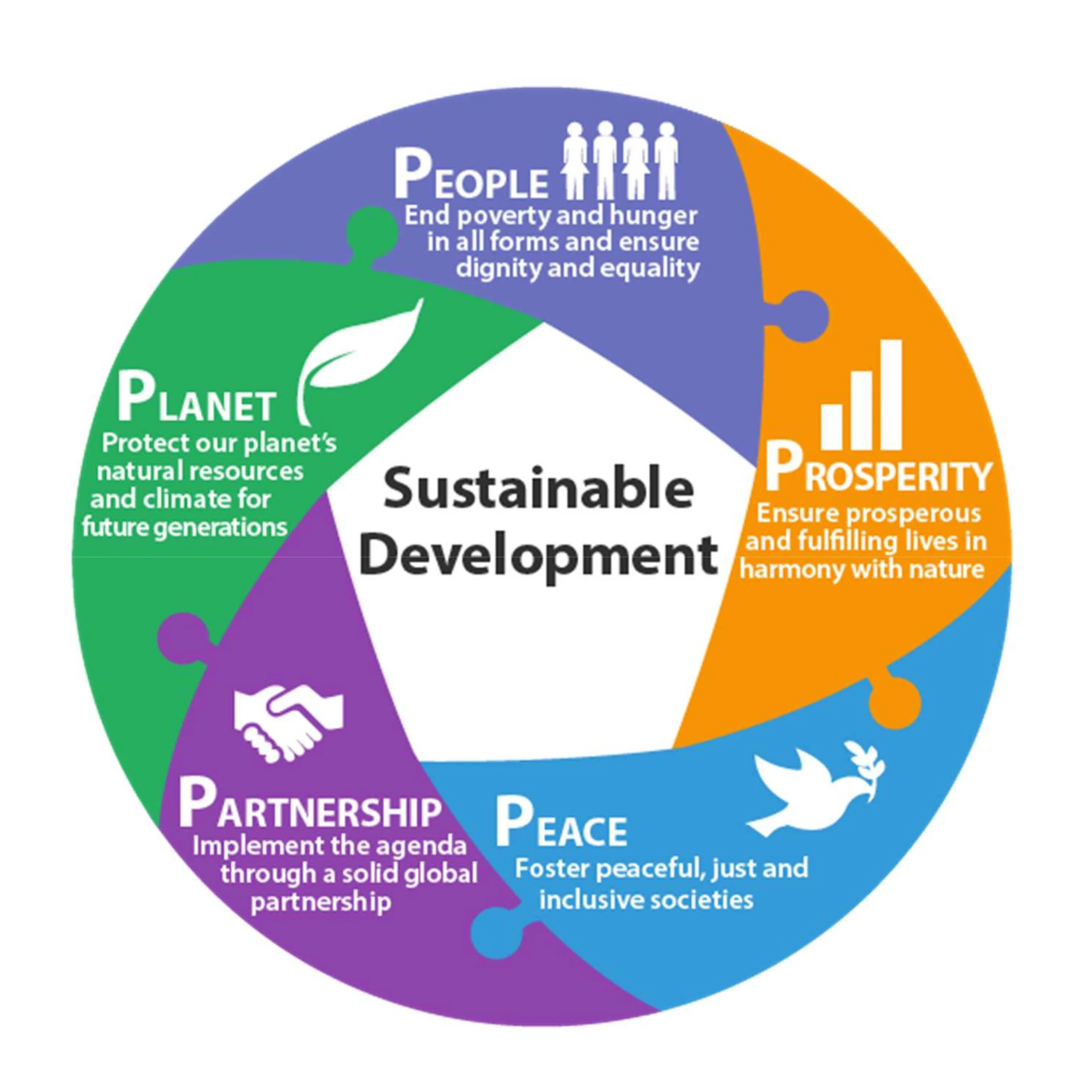
The Nguzo Saba are more than values to be celebrated for seven days; they are a continuous, living call to action. They establish the foundational spirit needed to drive tangible, positive change across the diaspora, starting with the first and most critical principle.
Day 1: Umoja (Unity) – The power of collective strength
The principle of Umoja calls upon us to strive for and maintain unity in the family, community, nation, African continent and diaspora. It is the understanding that a collective identity strengthens all parts of the whole. This unity is not merely a passive agreement but an active, purposeful collaboration essential for achieving the UN’s ‘Partnership’ goal.
Historical root: The Harlem Renaissance
A powerful historical embodiment of Umoja is the Harlem Renaissance of the 1920s and 1930s in the United States. This period saw a collective outpouring of Black artistic, literary, and intellectual talent, where individuals, writers like Langston Hughes and Zora Neale Hurston, and artists like Aaron Douglas, consciously worked together to define and celebrate a shared cultural identity. It was a movement of self-discovery and cultural affirmation, demonstrating how unity among creators can challenge prevailing narratives and lay the foundation for future social and political movements. The unity found in this creative collective created a cultural anchor for the diaspora that continues to resonate globally.
The Harlem Renaissance

Ultimately, Umoja reminds us that our strength is not individual, but collective, forging the social cohesion required for sustainable development and resilience.

Read more on the importance of this principle in our original article: Kwanzaa Festival Day 1: Umoja – Empowering communities through Unity
Day 2: Kujichagulia (Self-Determination) – Defining our own future
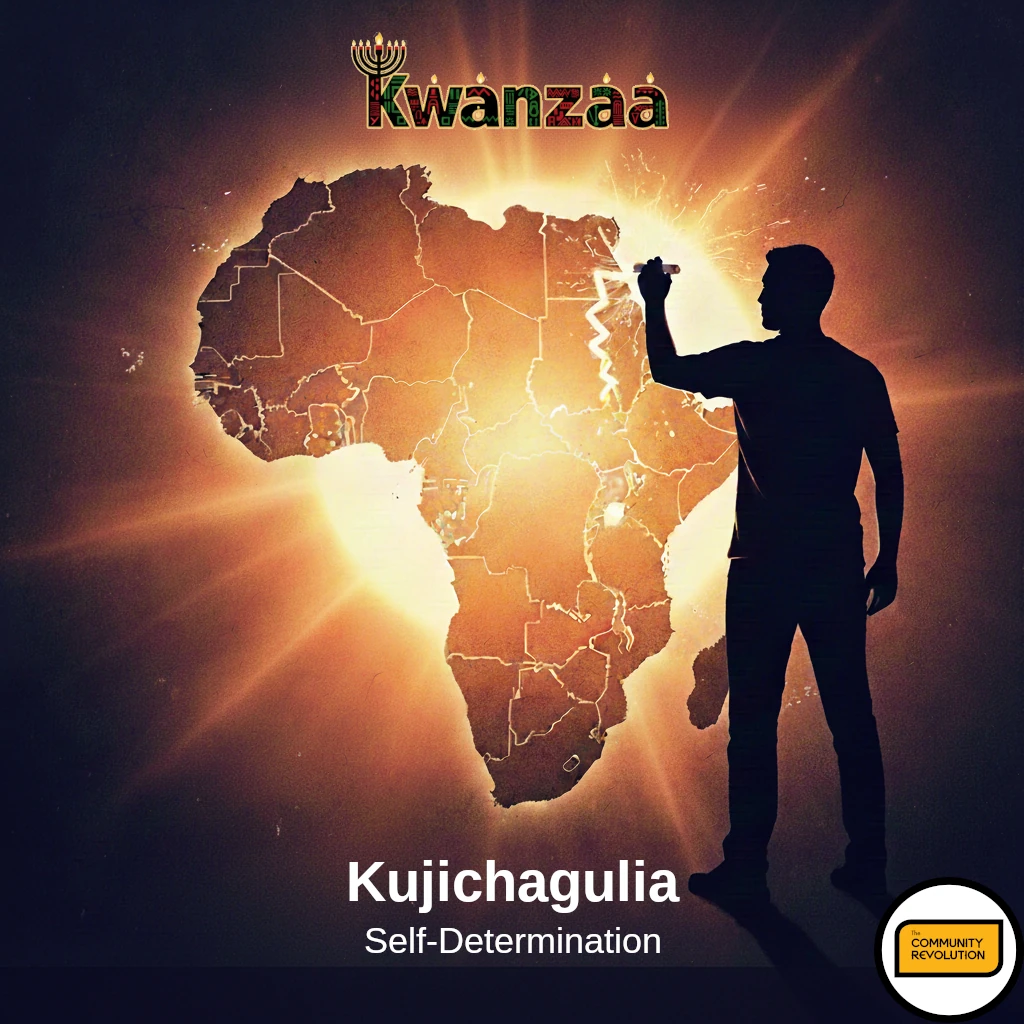
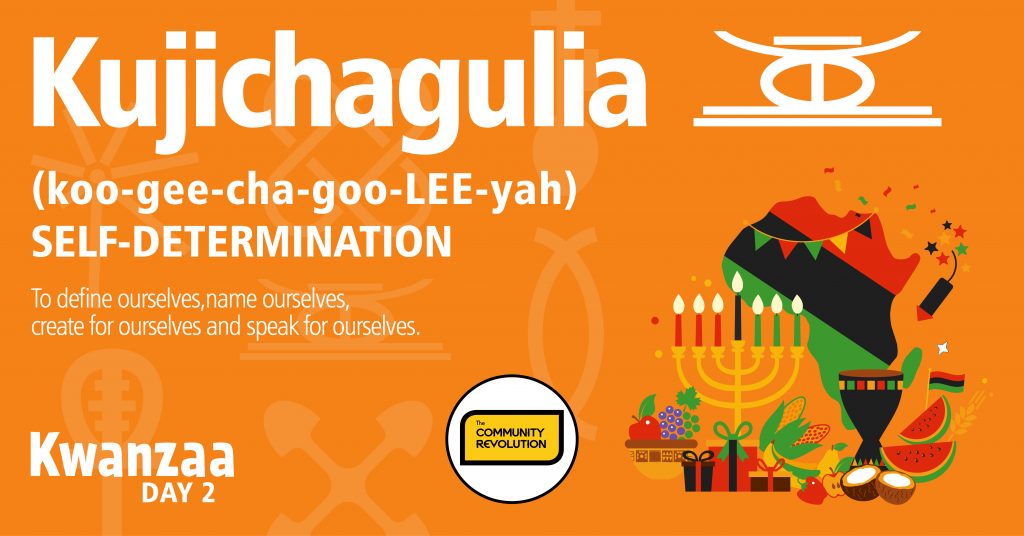
Kujichagulia is the commitment to define ourselves, name ourselves, create for ourselves, and speak for ourselves, instead of being defined, named, created for, and spoken for by others. This principle directly relates to the importance of education, digital literacy and skills, taking control of one’s own narrative and economic destiny in the modern age.

Historical root: The Pan-African movement
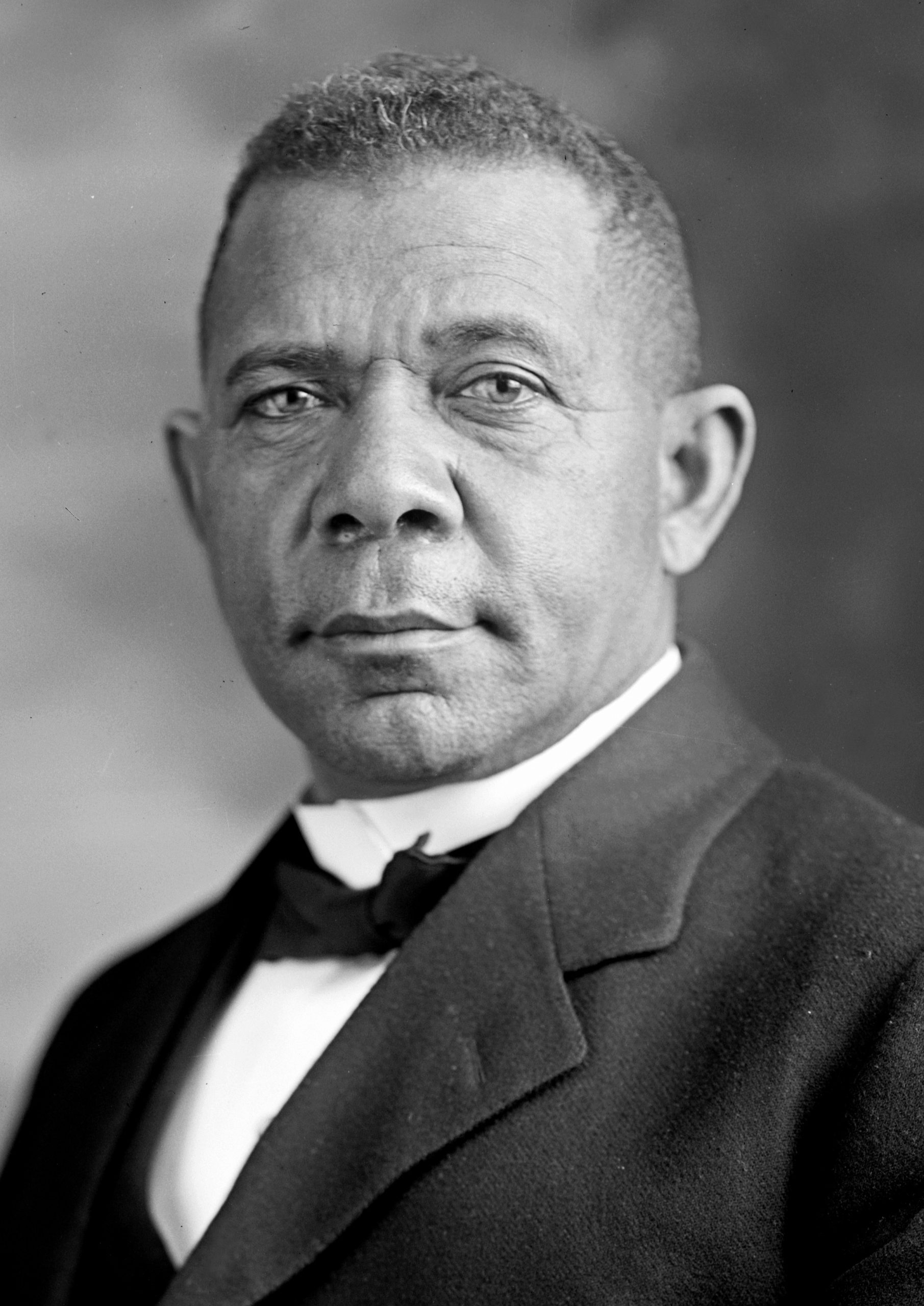
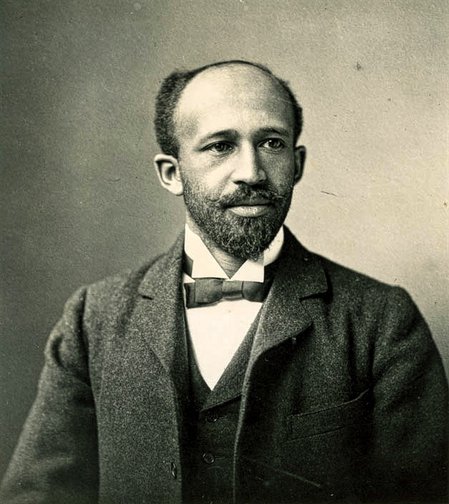
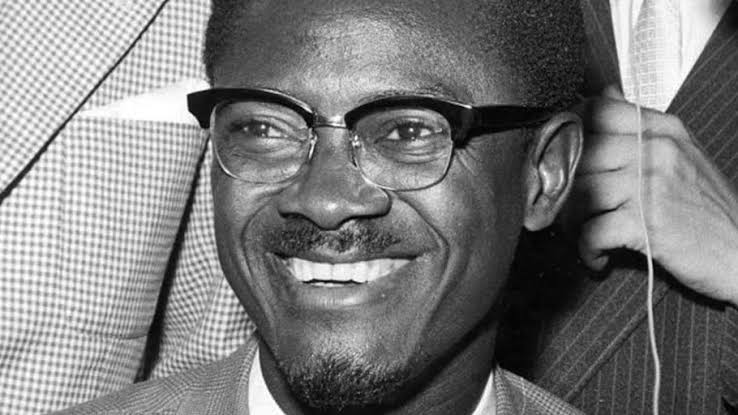
The quest for self-determination finds its powerful political expression in the Pan-African Movement. Visionary leaders such as Kwame Nkrumah of Ghana, Julius Nyerere of Tanzania, and Marcus Garvey of Jamaica, alongside other independence figures in the mid-20th century (W.E.B. Du Bois, Patrice Lumumba and Booker T. Washington to name a few), championed the idea that African people, both on the continent and in the diaspora, must unite to govern themselves and manage their own resources. Their struggle to move from colonial rule to self-governance provides a profound example of a people taking charge of their identity, challenging imposed limitations, and defining their own economic and political futures, a powerful blueprint for modern community development.
Photos of leading independence figures

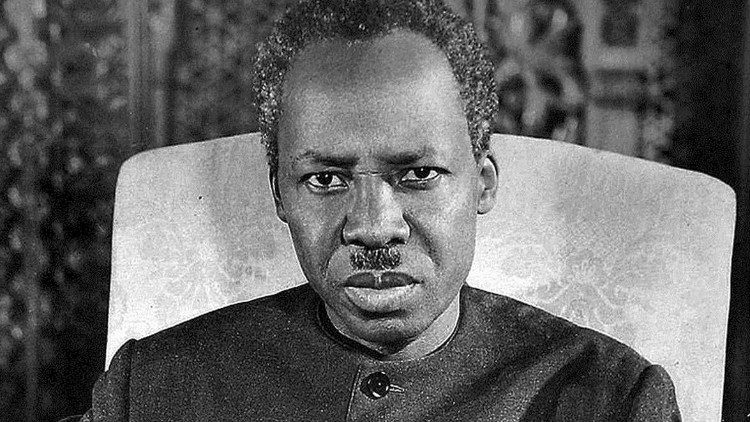
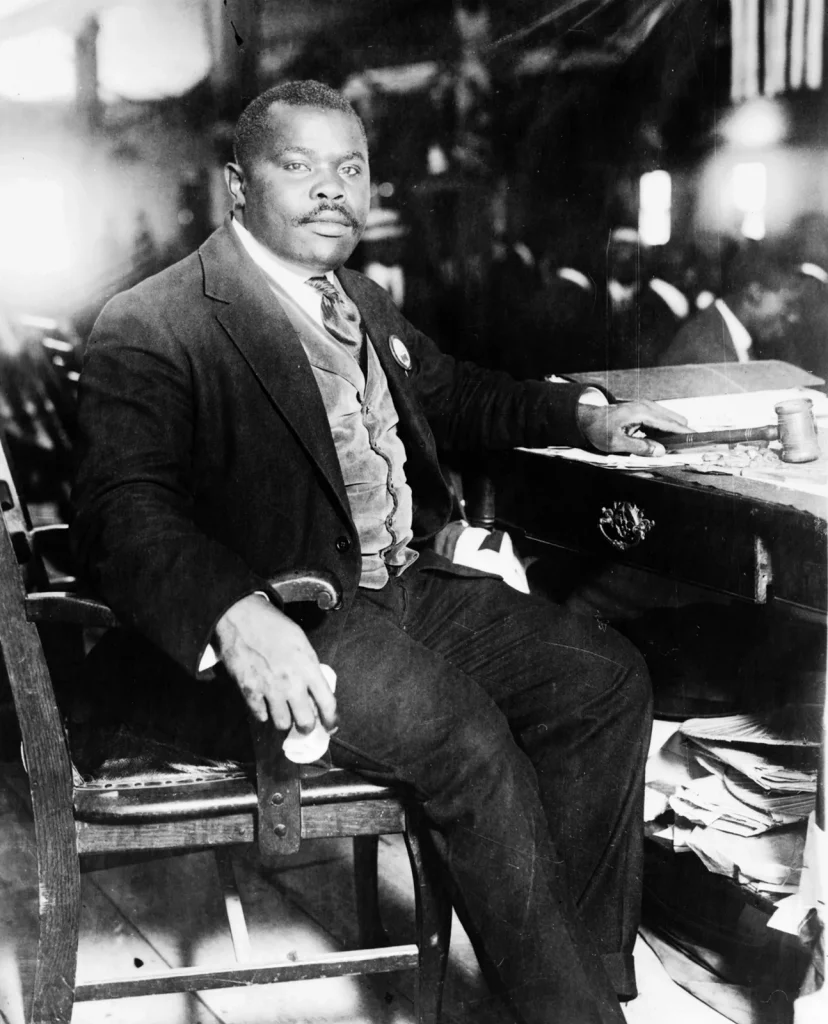
The Second Principle of Kwanzaa Kujichagulia: Self Determination
Through Kujichagulia, we affirm our right to a seat at the table, ensuring that the goals we pursue truly reflect our needs and aspirations.
Read more on the importance of this principle in our original article: Kwanzaa Festival Day 2: Kujichagulia: Taking charge of our identities and future
Day 3: Ujima (Collective Work and Responsibility) – Shared duty to build
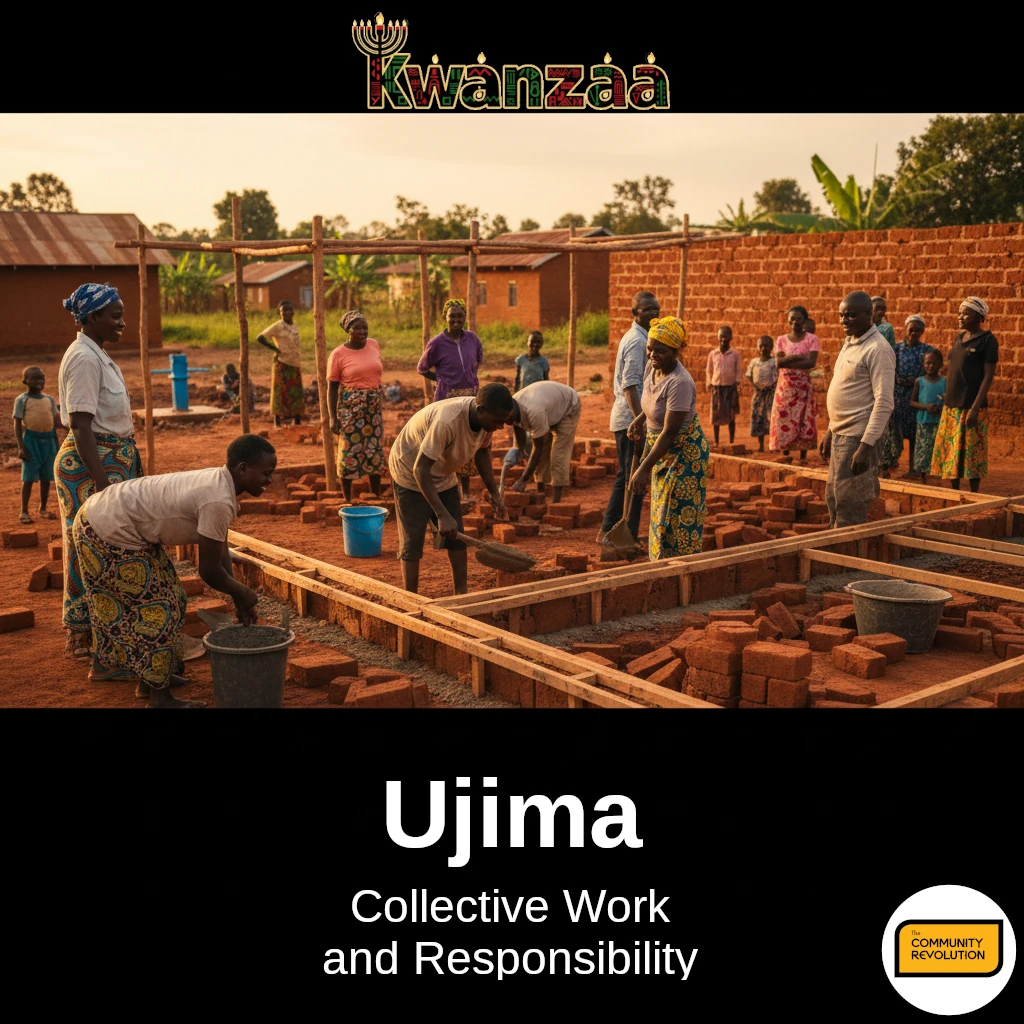
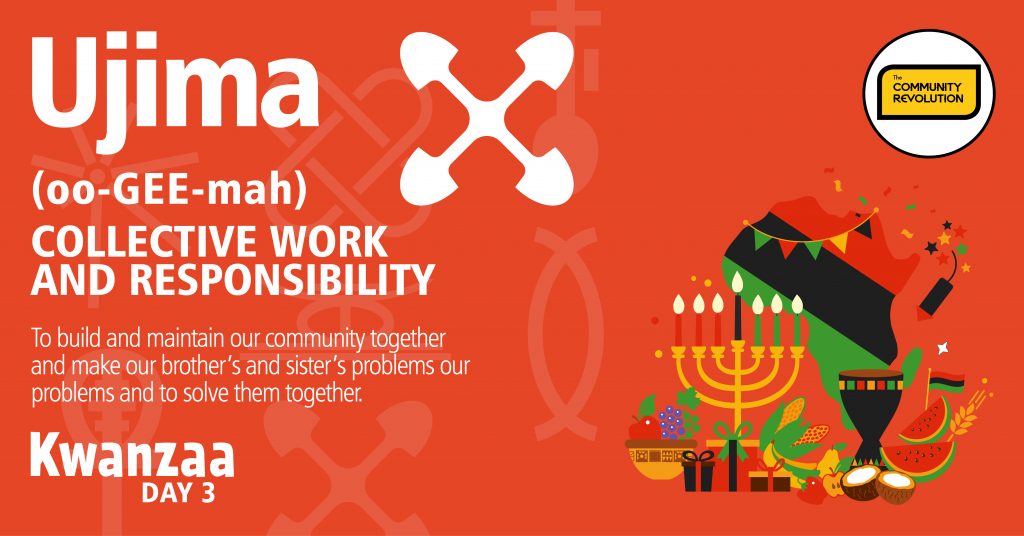
Ujima is about building and maintaining our community together and making our brothers’ and sisters’ problems our problems, and solving them together.
This principle is at the heart of sustainable development and regenerative agriculture, where the success of the land and the ecosystem is a shared responsibility, embodying the UN’s ‘Planet’ and ‘People’ goals.
Tales Unveiled Ep 1: Sustainable Development
Historical root: Traditional and modern communal labour
The principle of shared duty is demonstrated by long-standing traditions of collective responsibility across the continent and the diaspora. In Ghana, the Akan people practice Nnoboa (collective farming work) and Oman Adwuma (community work) where people voluntarily pool their efforts for a common purpose.
This is mirrored in Rwanda’s national tradition of Umuganda, and in Brazil’s concept of Mutirão, where communities come together to pool their labour for a common goal, such as building homes or bringing in the harvest. These practices exemplify how shared responsibility ensures the health, prosperity, and well-being of the entire community, offering a model for modern cooperative efforts.
Collective work and responsibility in action
Communal labour in Ghana
Communal Labour: A conversation on reviving age-old tradition for development
Mutirão in Brazil
MUTIRÃO – The COP of the global collective action!
Umuganda in Rwanda
Rise and Shine Rwanda: UMUGANDA
Collective responsibility in Climate Action
Carrying the Spirit of Mutirão to Tackle Climate Change
Ujima teaches us that every individual is a stakeholder in the community’s success and is responsible for its progress.
Read more on the importance of this principle in our original article: Kwanzaa Festival Day 3: Ujima: The power of collective effort and shared responsibility
Day 4: Ujamaa (Cooperative Economics) – Building prosperity together
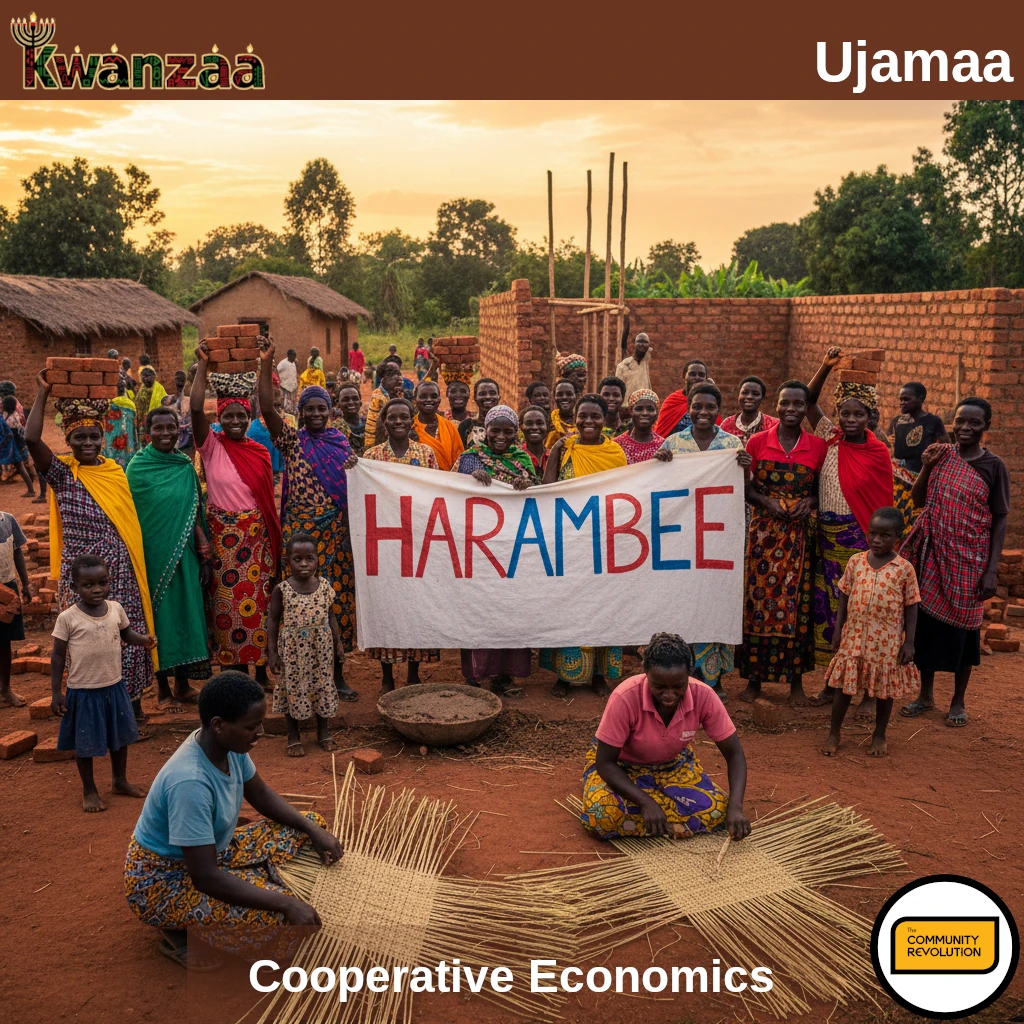
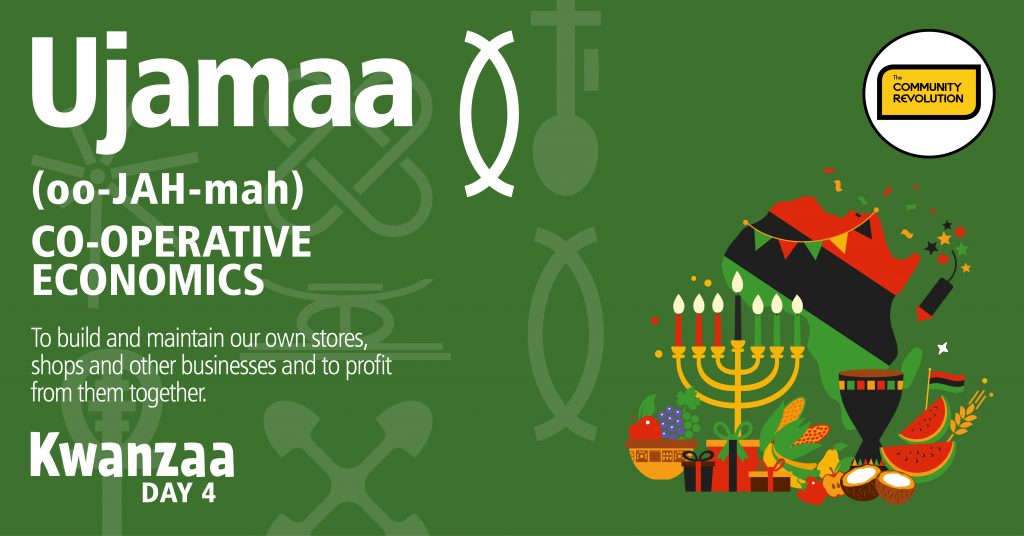
Ujamaa compels us to build and maintain our own stores, shops, and other businesses, and to profit from them together. This principle is crucial for the development of sustainable local economies and entrepreneurship in partner regions, perfectly aligning with the UN’s ‘Prosperity’ goal. It advocates for collective wealth creation that serves the community rather than just the individual.
Historical root: Early Black-owned economies
In the face of economic exclusion, historical Black communities in the diaspora created powerful economic circuits. Figures like W.E.B. Du Bois advocated for a system of cooperative economics, where communities would pool resources to collectively own and manage their own production and distribution enterprises, ensuring profits circulated to benefit all members. These cooperative visions, along with self-help models such as the Tuskegee Model and vibrant economies like Tulsa’s ‘Black Wall Street,’ demonstrate that economic power is achieved through mutual support and shared ownership.
Black Wall Street Established in Tulsa, Oklahoma | Tulsa Burning: The 1921 Race Massacre
On the African continent, this philosophy is mirrored by the Swahili word Ujamaa (meaning ‘familyhood’), which became the basis for the socialist development policies of Julius Nyerere in Tanzania, promoting communal growth and shared social wealth. The Kenyan motto Harambee, meaning “everyone pulling together,” also captures this spirit of collective support.
What is Ujamaa?
Defining Moments: Harambee
By practising Ujamaa, we ensure that the wealth we generate cycles back into the communities that need it most, fostering sustained growth.
Read more on the importance of this principle in our original article: Kwanzaa Festival Day 4: Ujamaa: Building prosperity through cooperative economics
Day 5: Nia (Purpose) – Restoring our greatness
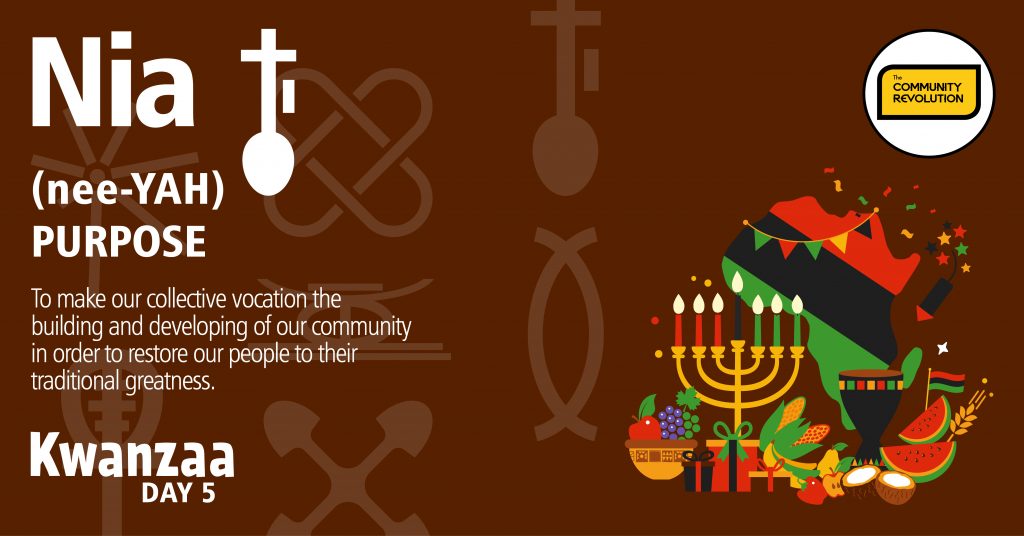
Nia is about making our collective vocation the building and developing of our community in order to restore our people to their traditional greatness. For The Community Revolution, this ties into the pursuit of impact, justice, and the Sustainable Development Goals (SDGs), a collective intention to develop our shared world.
Historical root: A global vocation for justice
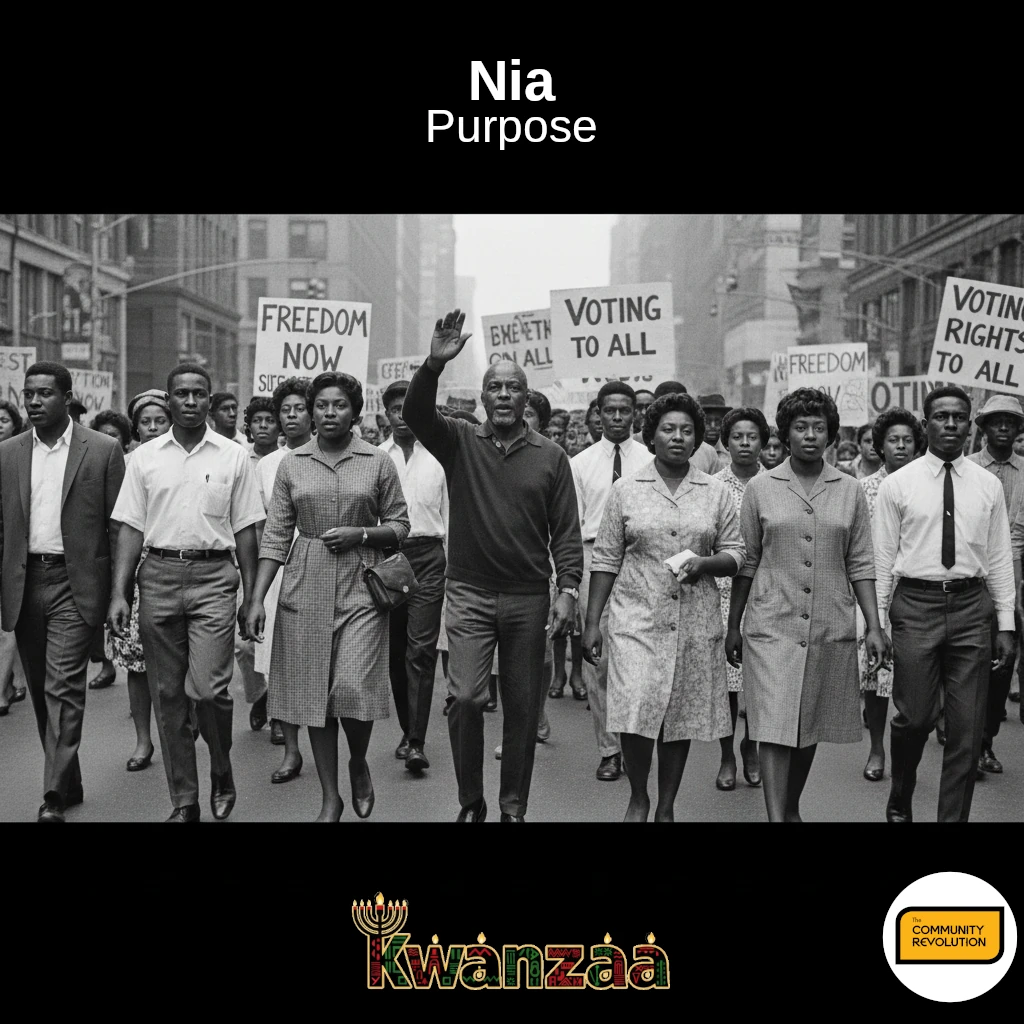
Nia is powerfully demonstrated by collective movements galvanised by a singular purpose of achieving justice and equality. The American Civil Rights Movement of the 1950s and 1960s, led by figures such as Dr. Martin Luther King Jr., Rosa Parks, and John Lewis was a movement that transcended individual ambition, uniting millions under a clear moral objective. The clarity of this purpose led to transformative social and political change.
The Civil Rights Movement
Civil Rights Turning Points in Every Decade | History by The Decade
This collective intention is mirrored in the history of Latin America, notably with the Black Movement of Salvador, Brazil (also known as the Movimento Negro). Recognised as a major hub of African culture outside of Africa, Salvador’s movement is a continuous, purposeful effort to fight systemic racism, affirm Black identity, and demand social, political, and economic inclusion. This dedication to a shared moral compass ensures every endeavour serves the greater good, proving that a unified, collective intention can overcome entrenched injustice.
História do Movimento Negro Brasileiro (History of the Brazilian Black Movement)
Nia provides the moral compass for our work, ensuring every endeavour serves the greater good and contributes to a lasting legacy.
Read more on the importance of this principle in our original article: Kwanzaa Festival Day 5: Nia: Defining purpose and working toward meaningful goals
Day 6: Kuumba (Creativity) – Uplifting our community and leaving it more beautiful for the next generation
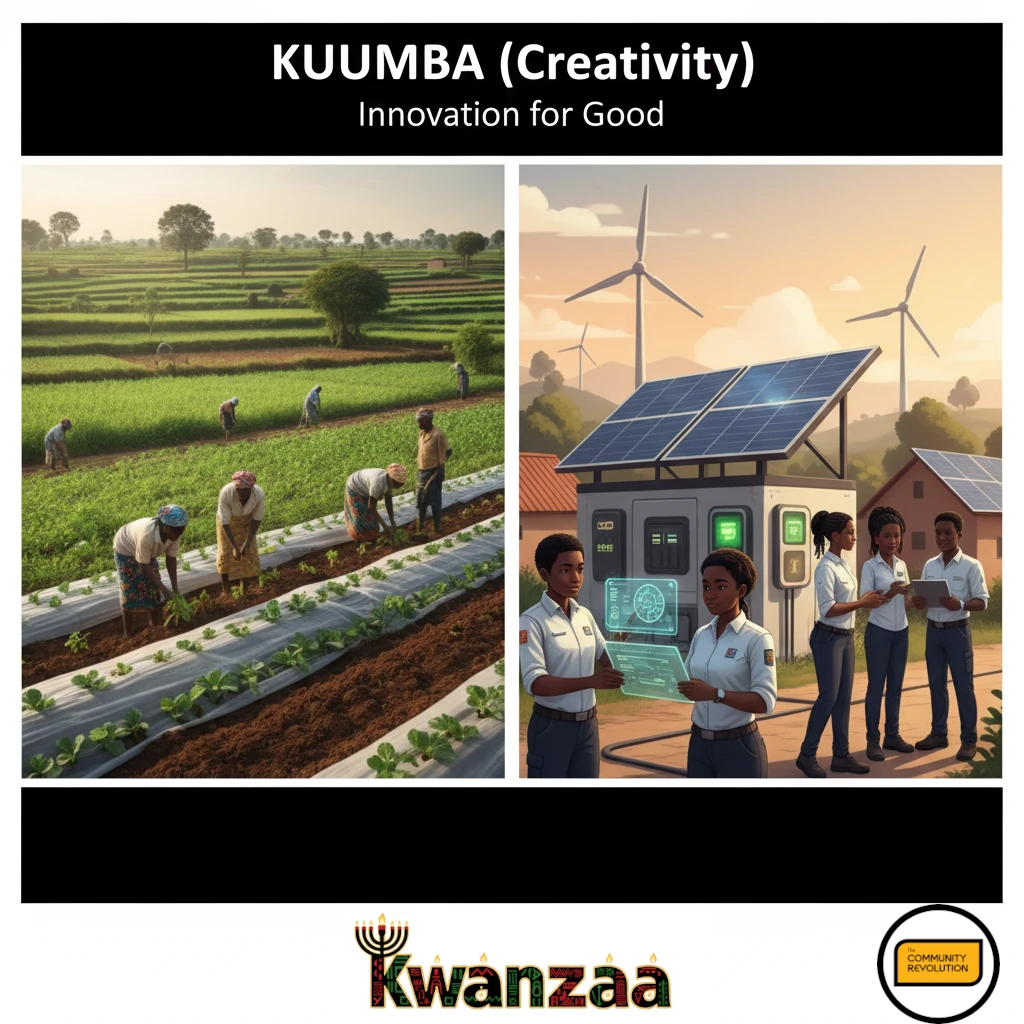
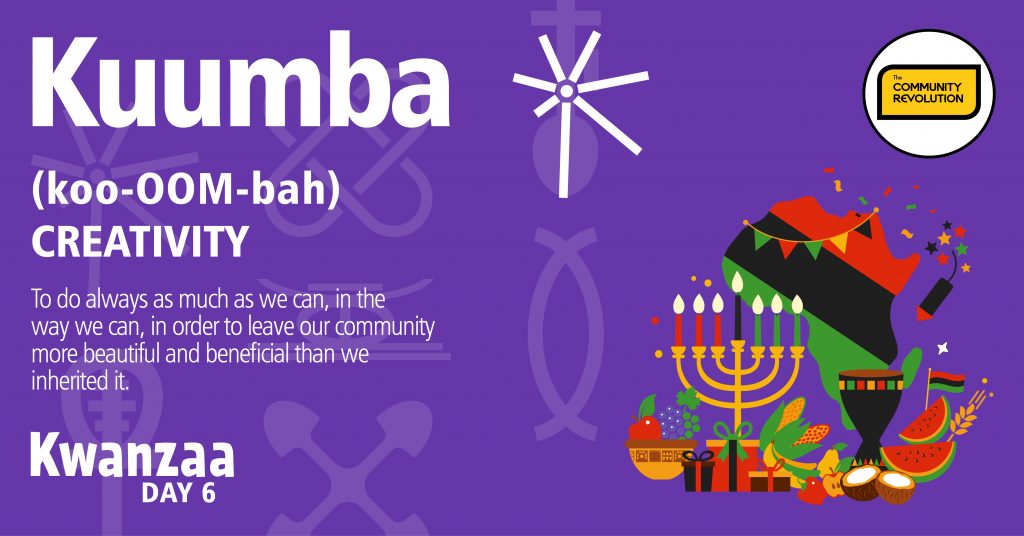
Kuumba, or creativity, is the principle that challenges us to “always do as much as we can, in the way we can, in order to leave our community more beautiful and beneficial than we inherited it.”.
This creativity is about more than artistic expression; it is about innovation, problem-solving, and resilience in the face of challenges.
At The Community Revolution, we embrace Kuumba by offering innovative sustainable development solutions across our thematic areas of digital skills, renewable energy, and regenerative agriculture. Our work, such as the Moringa Initiative combining nature-based practices with digital solutions, is an act of creativity aimed at leaving future generations a better world, providing evidence-based solutions through knowledge and innovation.
Historical root: Symbolic African textiles and art
The principle of Kuumba is deeply embedded in traditional African arts, such as the elaborate patterns and symbols of Kente cloth from Ghana. Historically reserved for royalty, every colour and motif in Kente is carefully chosen to communicate history, wisdom, and communal values. This purposeful creativity is further exemplified by Adinkra symbols, which are visual representations of proverbs and philosophical concepts. Together, these symbolic art forms are not merely decoration; they are a purposeful, symbolic act of creativity that preserves identity and enhances the cultural value of the community. They teach that creativity must be meaningful, functional, and reflective of a people’s highest aspirations, a standard for all modern-day innovation.
Craftsmanship of traditional woven textile Kente
Adinkra: Sankofa, Duafe, Gye Nyame. What are they? How to say them.
We honour Kuumba by applying our best efforts to solve problems, ensuring that our output is always purposeful, beautiful, and beneficial.
Read more on the importance of this principle in our original article: Kwanzaa Festival Day 6: Kuumba: Using creativity to improve our communities
Day 7: Imani (Faith) – Belief in our people and future
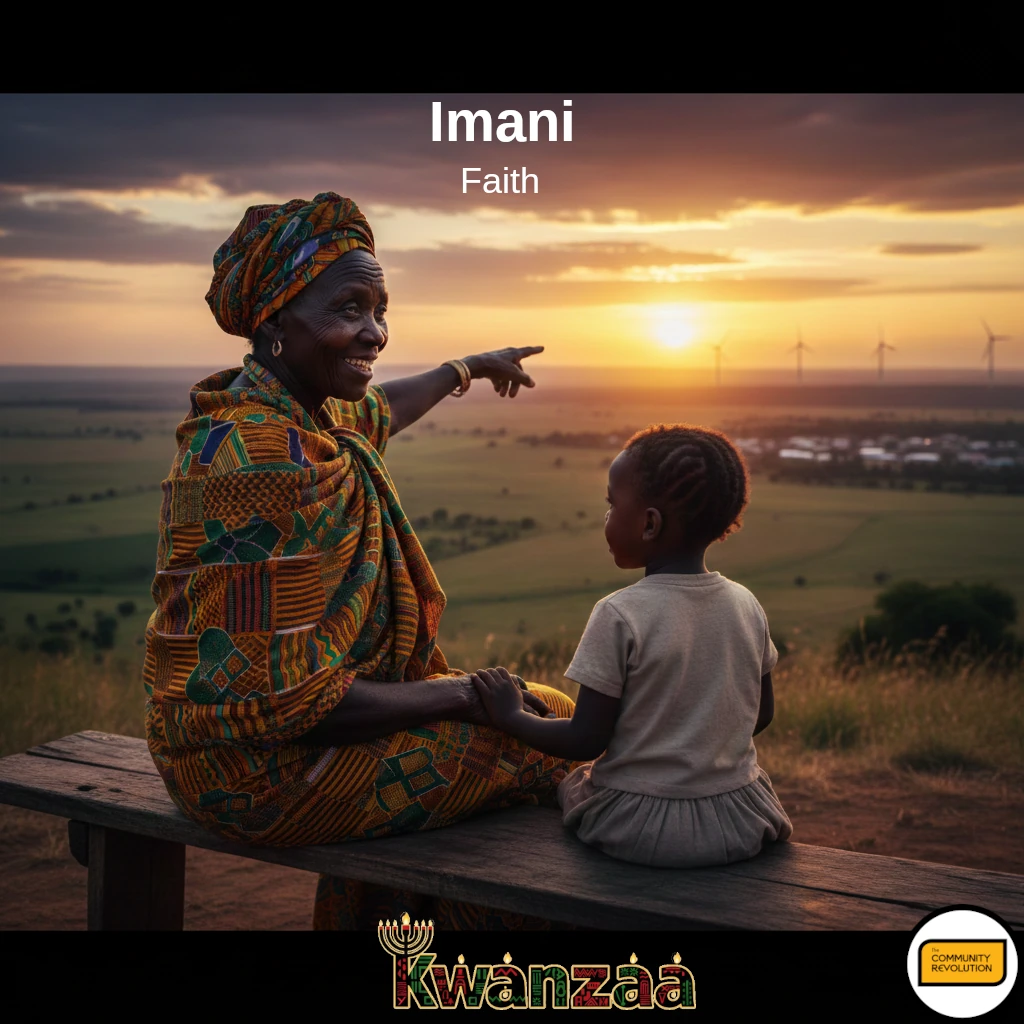
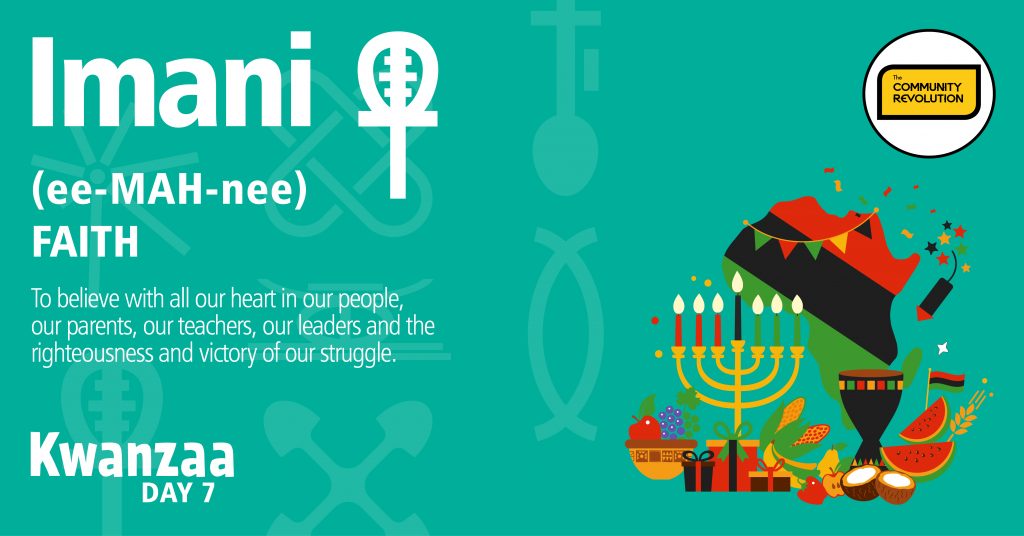
Imani, or faith, is the final principle, urging us to believe “in our people, parents, teachers, leaders, and the righteousness and victory of our struggle.” It is about trusting in the collective strength of our communities, our ability to overcome challenges, and our potential to create a hopeful future. It is the enduring faith that we can achieve the change we seek through collective effort, partnership, and peace, securing the UN’s ‘Peace’ goal.
Imani is an intrinsic part of the African cultural experience, linking us to our history and inspiring hope for the future, a future built on the contributions, sacrifices, and dreams of our ancestors. At The Community Revolution, our work is underpinned by faith in young people, faith in the power of storytelling, and faith in community-led solutions to deliver social transformation.
Historical root: The founding of Kwanzaa
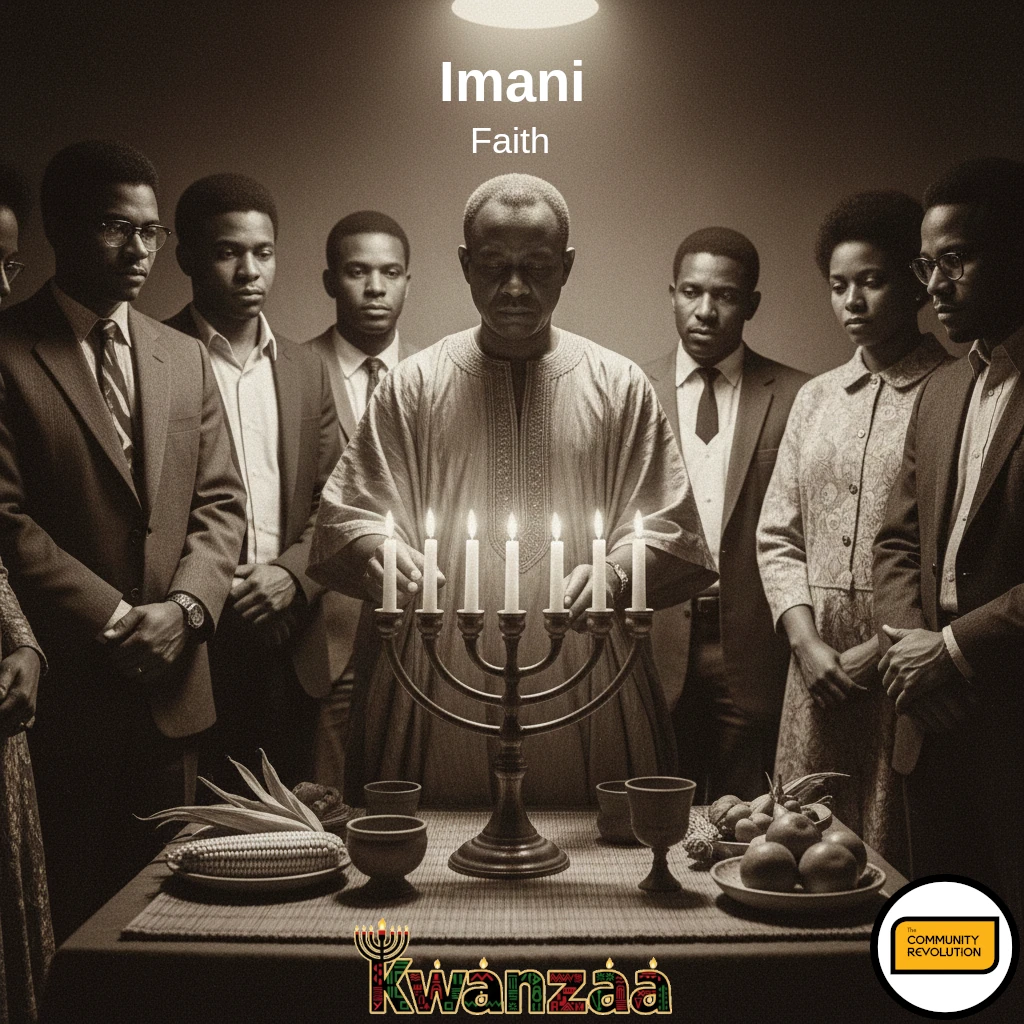
The ultimate historical context for Imani is the founding of Kwanzaa itself in 1966 by Dr. Maulana Karenga. Created in the aftermath of the Watts riots in Los Angeles, Kwanzaa was a direct act of faith, a belief that African Americans needed a cultural holiday rooted in African harvest traditions to foster unity, self-affirmation, and a shared moral framework. It was a faithful investment in the future of the community, asserting the power of shared values over despair and demonstrating that a lack of political or economic power can be countered by cultural and spiritual resilience. The continued global observance of Kwanzaa is a testament to the power of that original act of faith.
Imani is the spiritual fuel that sustains the work of Umoja, Kuumba, and all the other principles, offering a hopeful vision of a better future.
The Watts Riots
Read more on the importance of this principle in our original article: Kwanzaa Festival Day 7: Imani: Embracing faith in ourselves and our shared journey
Imani is the spiritual fuel that sustains the work of all the Nguzo Saba, offering a hopeful vision of a better future. The full journey of the seven principles is now complete. Continue reading below for our Conclusion: A call to connect and act to see how all seven principles lead to empowerment, diversity, and impact.
Conclusion: A call to connect and act
Kwanzaa is a powerful reminder that the most essential values for development, unity, purpose, collective work, and self-determination, are deeply embedded in African heritage. By embracing the Nguzo Saba, we honour this heritage while actively committing to a future defined by Empowerment, Diversity and Inclusion, and Impact.
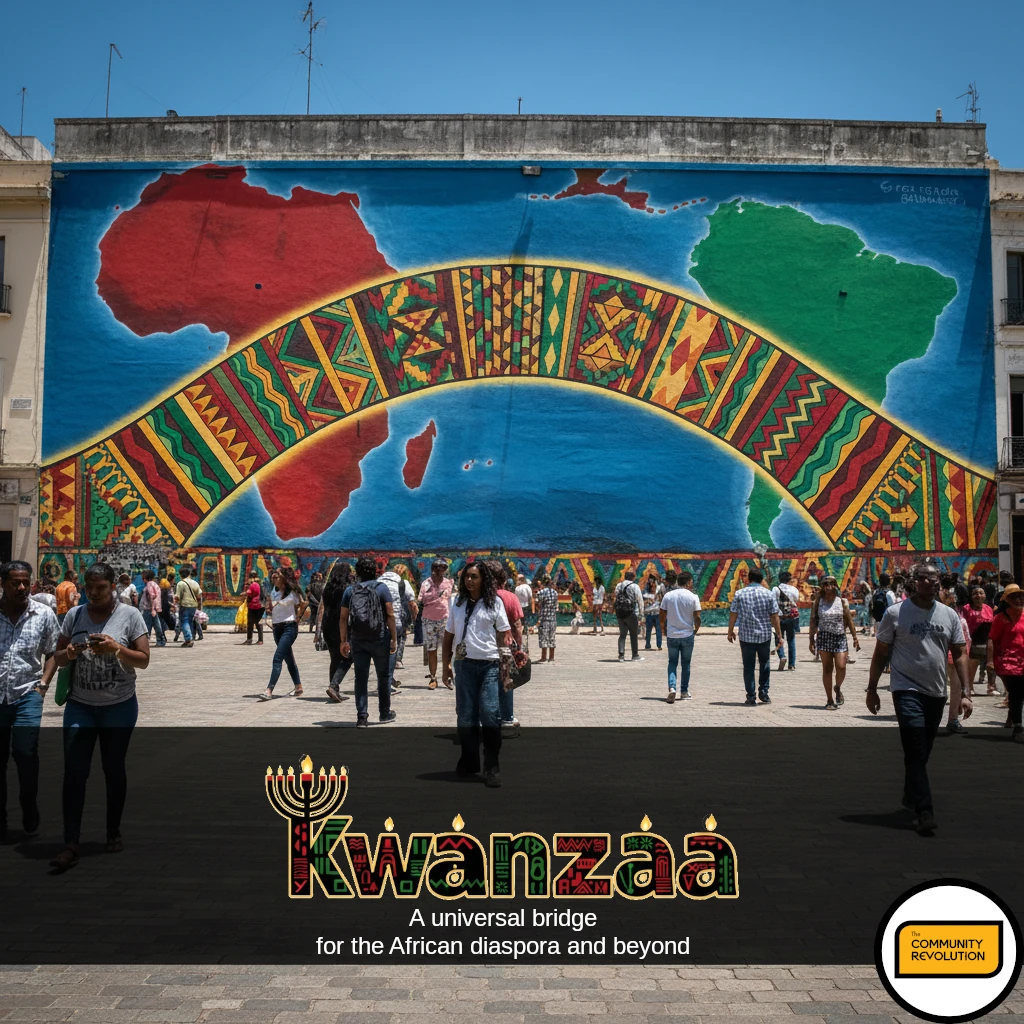
This philosophy acts as a universal bridge, connecting the African diaspora to the continent through shared values and a collective purpose for social and economic justice.
How do these principles resonate with your life? Share your stories of Umoja and Ujima in your community below to contribute to our ongoing dialogue and inspire a truly connected world.
Share your Kwanzaa story: We want to hear from you!
The Nguzo Saba are a universal philosophy, and we know they shape the lives and work of our community across the world.
Now, we invite you to take the next step. Which Kwanzaa principle resonates most with your personal story and life journey?
We are gathering real-life stories and insights from our audience to inspire a future community webinar and new content for our blog. Your experiences of Umoja, Ujima, and the other principles are the powerful foundation for the next stage of our work.
Click the image below to share your story, reflect on the principles, and contribute to our collective dialogue.
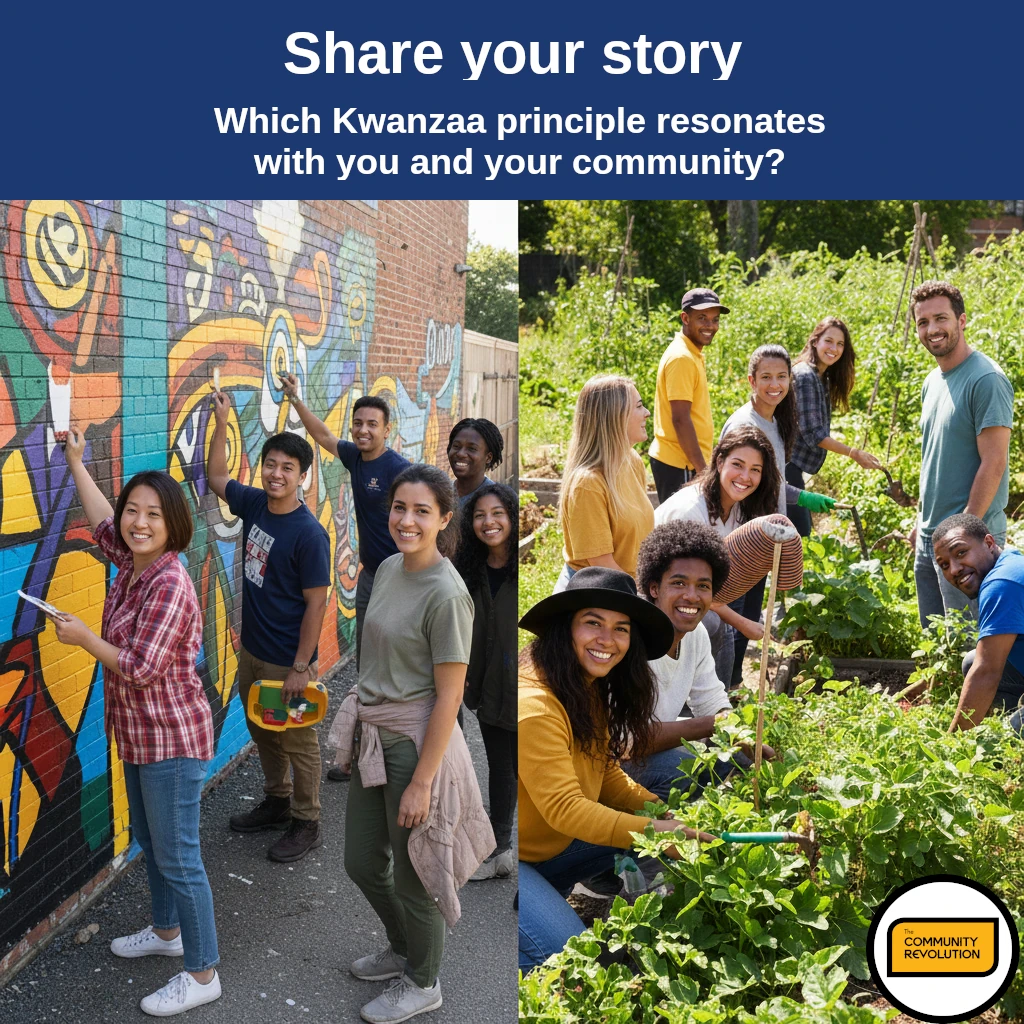
with you and your community?