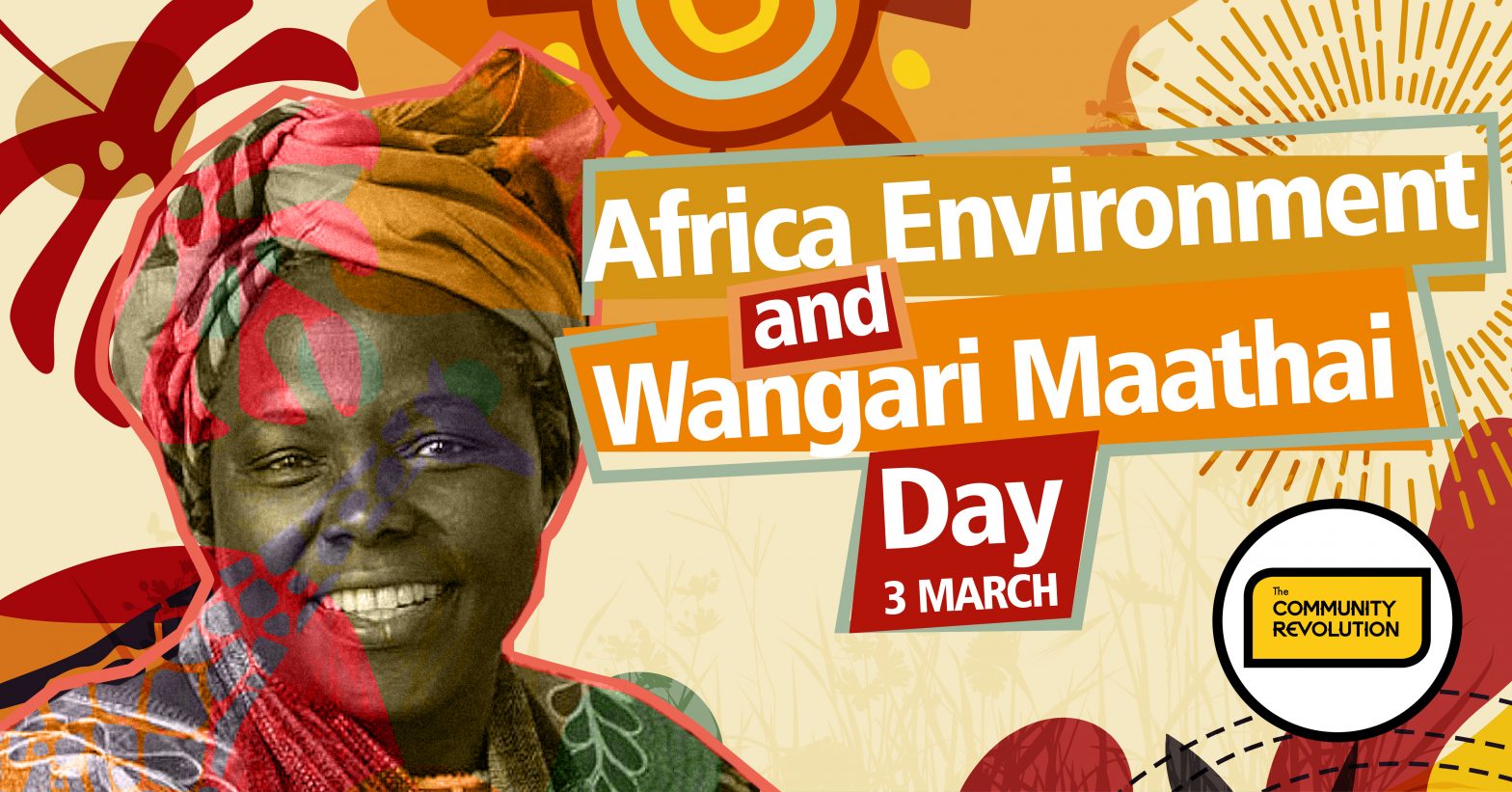
On March 3, 2026, we once again unite to honour Africa Environment Day and Wangari Maathai Day. This day reminds us of Africa’s extraordinary ecological wealth and the enduring legacy of Professor Wangari Maathai, whose vision continues to inspire environmental stewardship across the continent.
Recent reports from the World Meteorological Organization highlight that African nations are losing between 2–5% of GDP annually due to climate extremes, with some diverting up to 9% of national budgets to climate adaptation. This alarming economic strain underscores a fundamental truth: environmental stability is economic stability. It also frames the profound urgency of the African Union’s 2026 continental theme: “Assuring Sustainable Water Availability and Safe Sanitation Systems”.
Wangari Maathai’s legacy is a water story
Wangari Maathai’s Green Belt Movement is famous for planting over 50 million trees, but her influence was always about more than reforestation. For Maathai, trees were a holistic solution, they prevented soil erosion, provided food and fuel, and, crucially, protected vital water catchments. Her vision was one of environmental health, where the land, the community, and the water supply were inextricably linked.
Today, this holistic view is the roadmap for tackling Africa’s most pressing challenges. It is a philosophy perfectly aligned with the AU’s water and sanitation focus. Climate change is manifesting primarily as a water crisis, impacting everything from food security to community peace.
Water, conflict and the Maasai Nature-based solution
The Community Revolution remains committed to translating Maathai’s philosophy into tangible, grassroots action. This year, we are spotlighting how our work with partners is directly addressing the water-health nexus through Nature-based solutions (NbS). NbS are actions to protect, sustainably manage, and restore natural or modified ecosystems, which effectively and adaptively address societal challenges while providing human well-being and biodiversity benefits. Agroecology is a powerful example of this in practice.
In Tanzania, water scarcity is a daily reality for the Maasai communities supported by our partner, RUCOSUO. For decades, these communities have faced significant challenges in finding water for their cattle and daily needs, with distances to safe water sources often exceeding 40km. This immense distance creates a source of perennial community conflict, health risks, and a profound barrier to sustainable agriculture.
This is where true innovation meets deep community knowledge and the principles of agroecology, a key Nature-based solution. Through the CERC-DL initiative, The Community Revolution and RUCOSUO are currently developing plans to introduce Solar Direct-Drive (SDD) water pumps. These pumps represent the potential to use clean, renewable energy to power the extraction and distribution of groundwater, drastically reducing the travel distance and labour required for water collection. This proposed intervention will simultaneously address:
- Climate resilience: By promoting the use of clean, sustainable energy.
- Community justice: By removing a major source of conflict and burden, particularly on women and girls who traditionally fetch water.
- Economic prosperity: By freeing up time and resources for agricultural production and other entrepreneurial and educational pursuits.
This strategic collaboration showcases a powerful synergy with our work, demonstrating how digital and renewable energy initiatives can deliver immediate, life-changing benefits. You can read more about how technology is supporting community development in our article on World Telecommunications and Information Society Day 2025.
Community action and innovation
Beyond water security, our work in food systems, such as the Moringa Initiative in Ghana, continues to empower rural communities with sustainable livelihoods while restoring biodiversity.
This work is rooted in agroecology, which is a core Nature-based solution for food systems. It is the practice of designing sustainable food systems that integrate ecological science with social justice. Models like regenerative agriculture and permaculture are key components of this approach, all echoing the Green Belt Movement’s core principle: empowering local people to be environmental stewards. You can read more on this subject in our related piece on four community climate solutions and the role of Nature-based solutions in biodiversity.
Maathai’s spirit of activism is truly alive in the next generation. In 2024, the Africa Environment and Wangari Maathai Day was marked at the UN Environment Assembly (UNEA-6) in Nairobi, where youth-led climate innovation hubs showcased their ideas in clean energy, waste reduction, and eco-entrepreneurship. These are the changemakers building the future.
Protecting our shared future
As we celebrate Africa Environment and Wangari Maathai Day 2026, let us recommit to protecting our planet. Wangari Maathai showed us that the smallest action, the planting of a single tree, the advocacy for a single community’s needs, can catalyse global change.
The work is far from over. If you are a Changemaker or Supporter, your action is essential. Be inspired by the Maasai community’s dedication to resilience and the power of sustainable solutions. Every donation, every piece of shared knowledge, and every hour spent volunteering helps us to progress life-changing projects like the SDD water pump initiative. Join us in building the resilient, sustainable Africa that Wangari Maathai dreamed of.