Sustainable roots: How community forestry builds economic resilience in Tanzania
As the global community marks International Day of Forests 2026 under the theme ‘Forests and economies’, the connection between healthy forest ecosystems and stable local economies has never been clearer. The United Nations and the Food and Agriculture Organisation (FAO) explicitly state that forests are the economic backbone for rural communities, providing income, food, and protection from disaster. For the Maasai pastoralists in Tanzania’s Manyara region, this connection dictates everything from land rights to food security.
The Community Revolution (TCR), in partnership with the Rural Community Support Organisation (RUCOSUO), is working to flip this narrative. Instead of viewing forest conservation as a restriction, we are demonstrating how community-managed agroecology, specifically through a shift to zero grazing, can become a fundamental driver of economic resilience, empowering women, and securing a sustainable future for the entire community. You can learn more about our wider work in our About page.
The economic reality: Land conflict and energy poverty
The FAO notes that billions worldwide rely on forests for essential needs, including energy. In Tanzania, this reliance manifests as a dual crisis. Pastoralists face the threat of land eviction as their traditional grazing is deemed non-compliant, directly impacting their economic land security. This systemic challenge is compounded by energy poverty; without reliable access, rural communities are forced to rely on firewood for cooking, a reliance shared by over two billion people globally.
This dependency has expensive consequences that far outweigh any short-term economic gains. The lack of clean energy directly impacts the local economy and food system: in rural pastoralist areas, up to 30–50% of milk spoilage occurs due to a lack of cold storage. Furthermore, community members must travel up to 40 kilometres for water, a massive burden and a significant cost in lost productive time.
Nature-based solutions: The pathway to economic stability
Our approach is rooted in Nature-based Solutions (NbS), designed to meet the rigorous standards of the IUCN Global Standard. By integrating clean energy technology with sustainable agriculture, we create a system that protects the environment while generating tangible income streams.
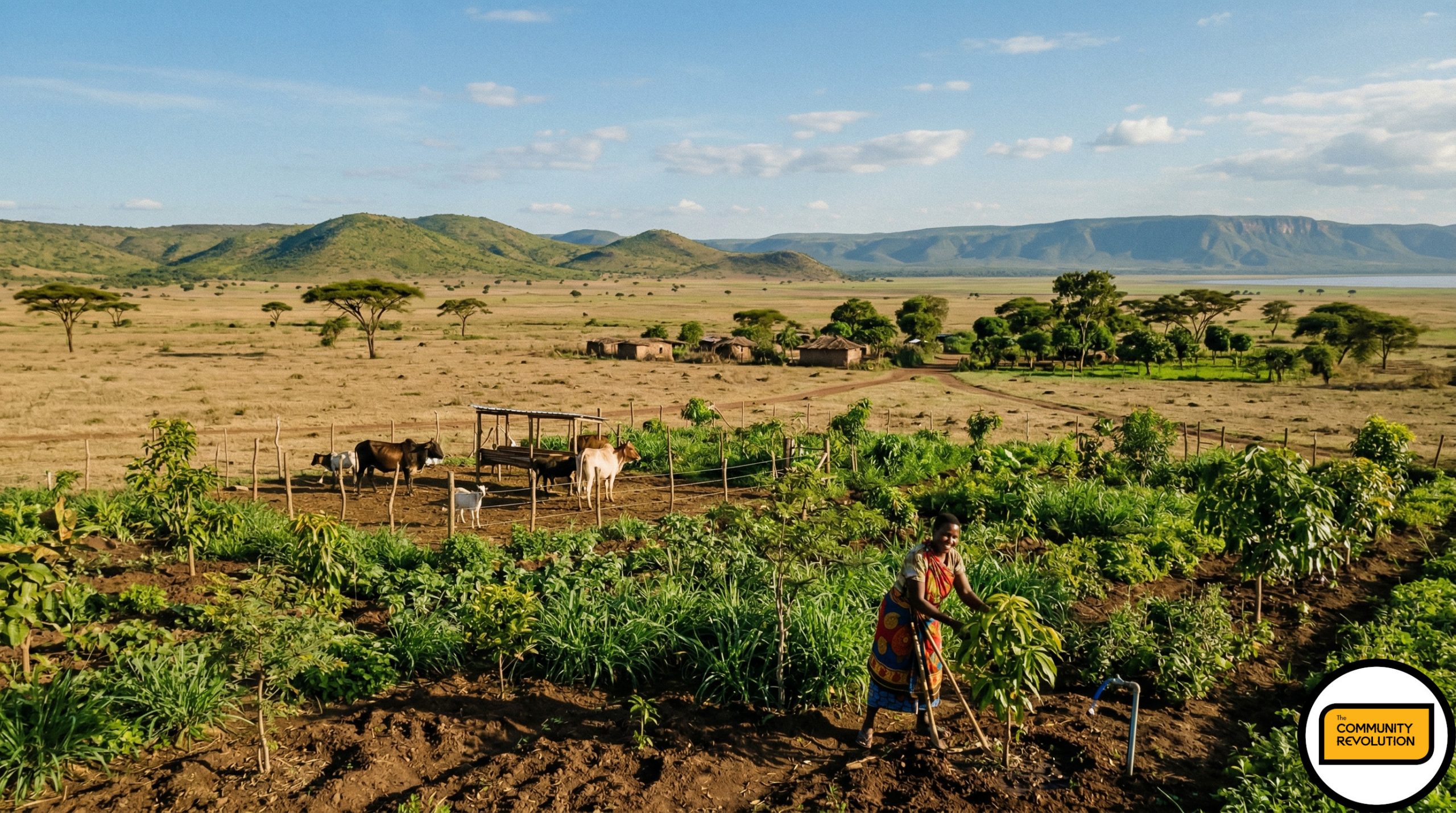
- Zero grazing as an economic asset: The transition to zero grazing is a crucial component of a Land Management Plan that allows communities to fulfil conservation duties, mitigating the threat of land conflict and securing their future. This practice, a relevant form of silvopasture agroforestry, explicitly protects the tree-based systems. The presence of trees improves soil health (soil structure, nutrition), which in turn enhances water retention, making the local environment more climate resilient. This protection of biodiversity, non-wood forest products, and climate resilience is essential for long-term economic stability of the food system. This strategy aligns with our previous work on Nature-based Solutions.
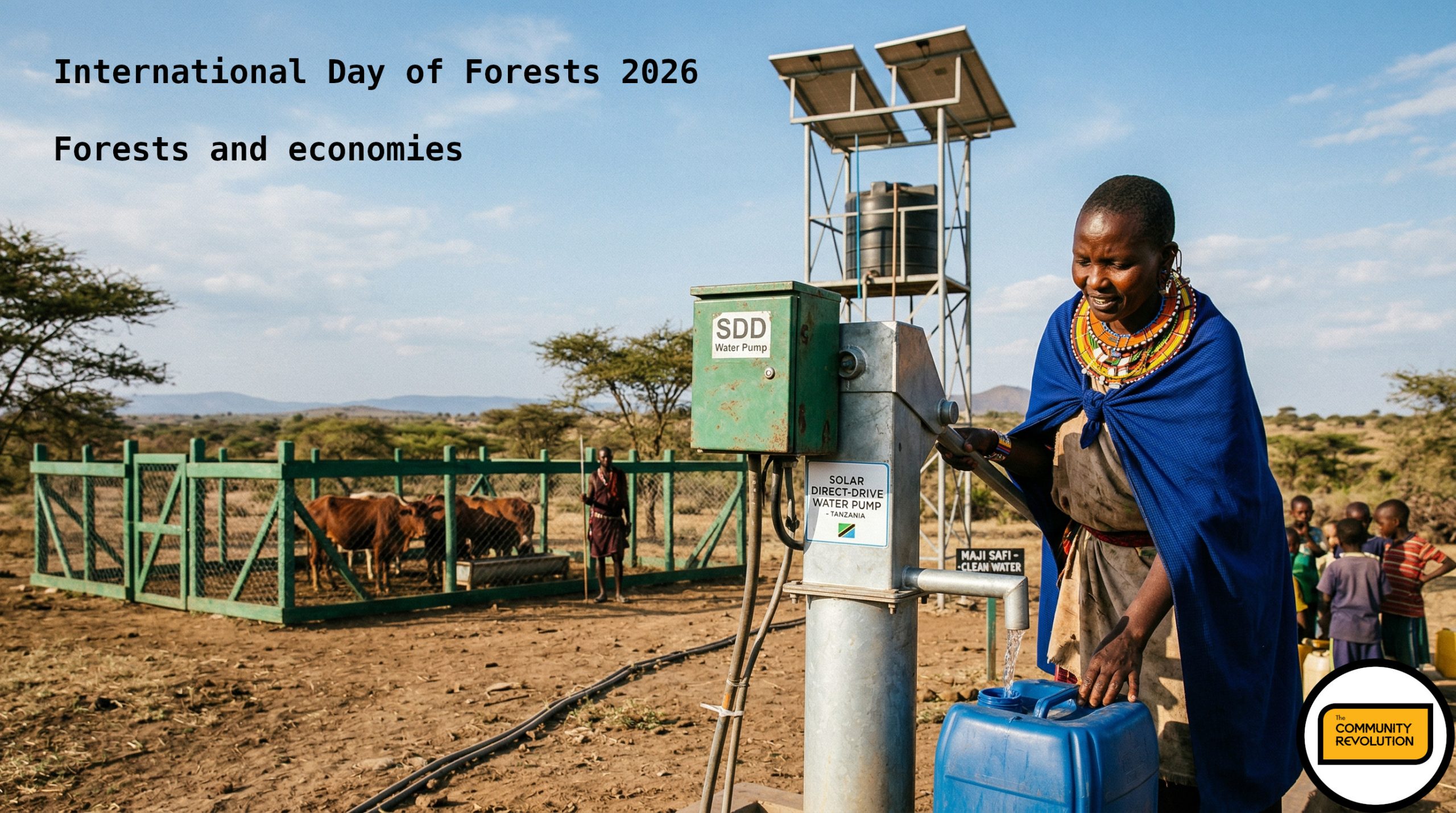
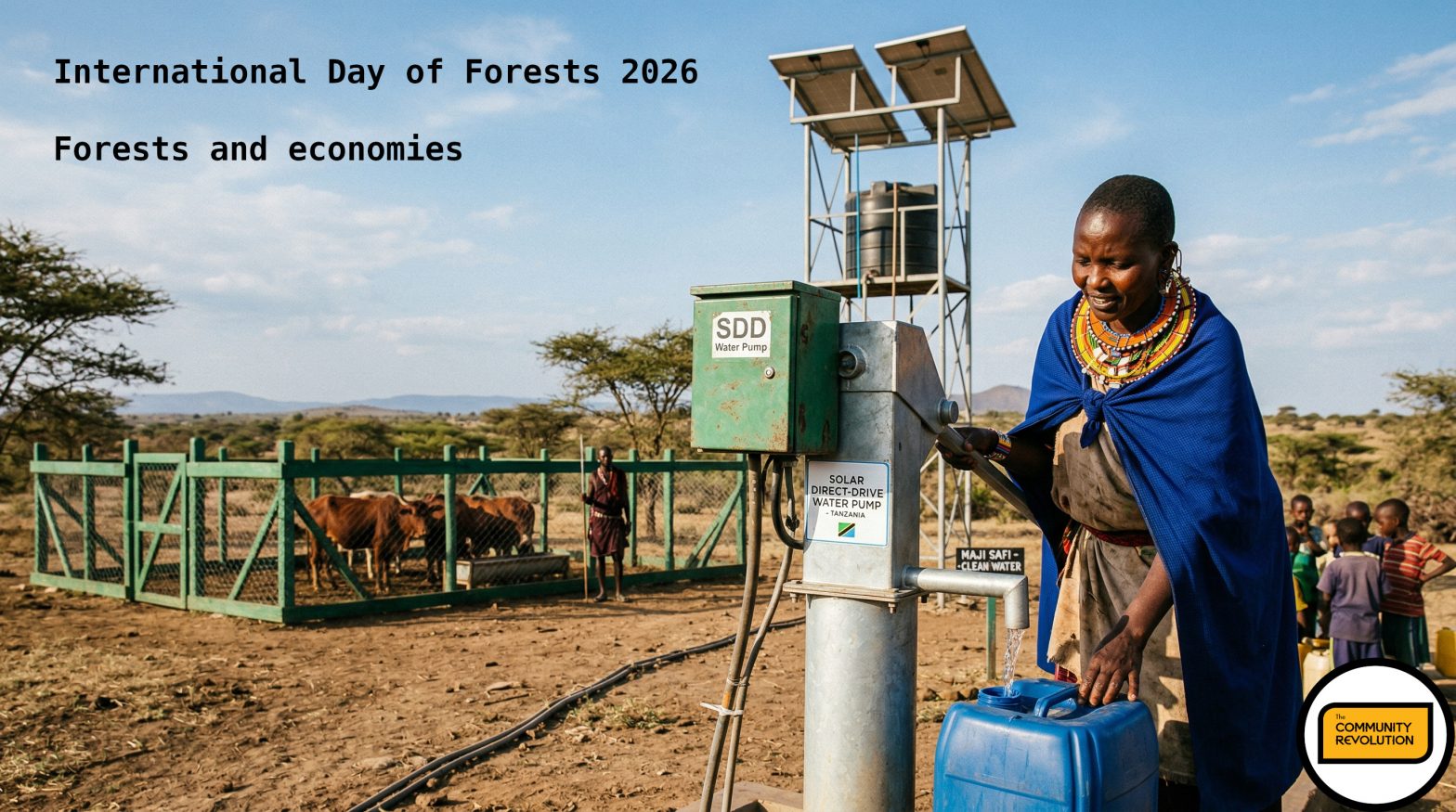
- Solar power transforming livelihoods: Clean energy provides immediate financial gain by targeting high-loss processes within the food system. The FAO highlights that healthy forests contribute to clean water production; by deploying sustainable solutions like Solar Direct-Drive (SDD) water pumps, we significantly reduce the cost of accessing clean water and free up productive time. Crucially, for food production and the local economy, moving to solar-powered storage tackles the high rate of milk spoilage. This can reduce operational expenditure by up to 60%, largely by eliminating spoilage and diesel reliance. This model is similar to strategies outlined in our Moringa Initiative report.
- New income streams through women’s empowerment: Community buy-in is accelerated by introducing women to new income-generating activities, such as using sustainable biomass fuel and plug-and-play electric solar cookers for business. This supports the sustainable reliance on non-wood forest products and ensures economic benefits are inclusive.
A long-term model: Payment for ecosystem services (PES)
To ensure true long-term financial resilience, moving beyond donor dependence, the financial model for zero grazing explicitly explores how to generate revenue from Payment for Ecosystem Services (PES). By conserving the forest and sequestering carbon, the community can receive payments, turning their commitment to nature into a sustainable revenue stream and directly linking conservation to economic growth.
Furthermore, our commitment to capacity building through formal training in Livestock Health and Financial Literacy ensures that these economic benefits are managed effectively and inclusively, directly aligning with the organisational value of Empowerment.
Conclusion: Evidence-to-Funding flow
The Maasai agroecology project provides robust evidence that investing in forest conservation is vital and is the core of sustainable economic development. By integrating agroecology, clean energy, and targeted capacity building, we are creating an Evidence-to-Funding Flow that generates the necessary data to secure investment for future pilot programmes that deliver impact to our beneficiaries
The lesson for International Day of Forests 2026 is clear: investing in community-led forest solutions in places like the Manyara region of Tanzania is strategic economic investment that delivers measurable impact and genuine resilience. You can read more about the 2026 theme from the United Nations or the history of the day from the Food and Agriculture Organisation (FAO).