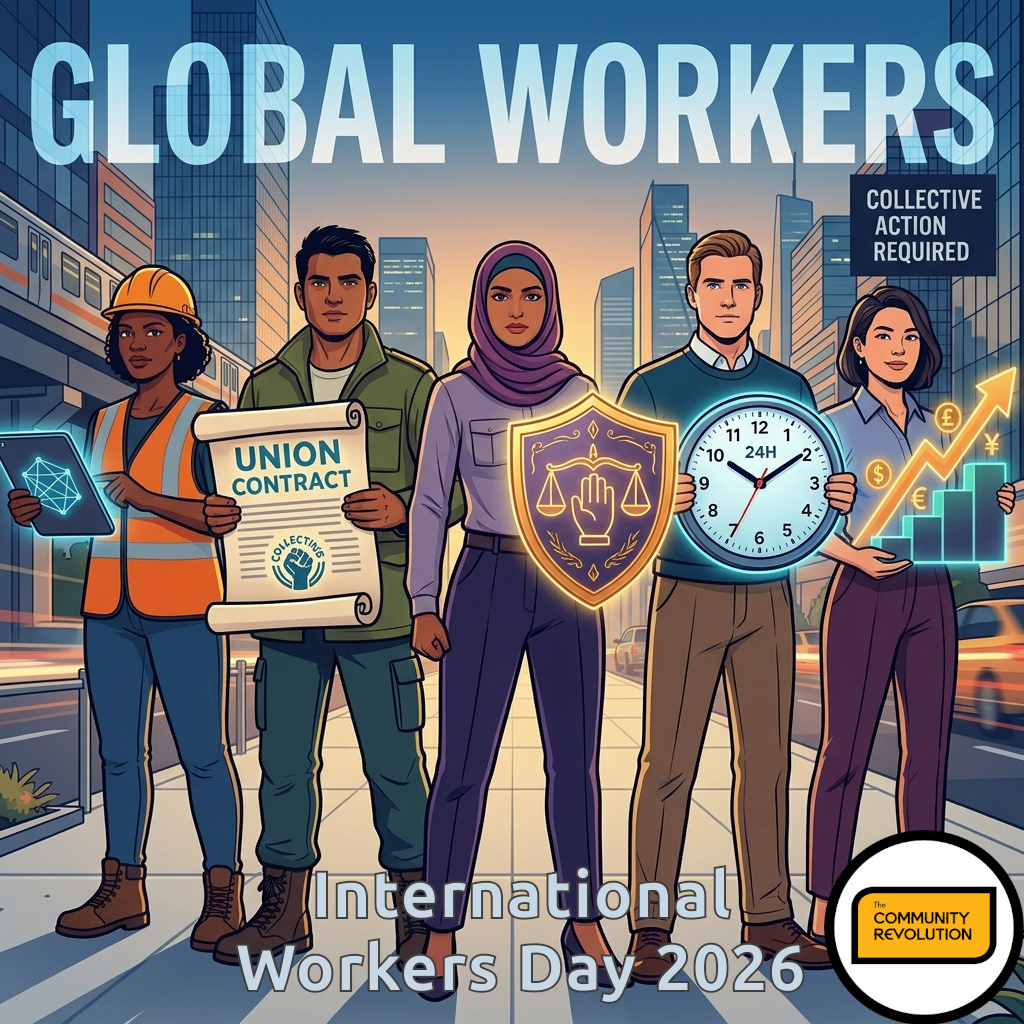
Today, on International Workers Day 2026, the global demand is clear: Workers Over Billionaires. This theme is not merely a rallying cry, but an urgent response to a systemic crisis where private profit is consistently prioritised over public well-being.
Across the world, an affordability crisis continues to accelerate, forcing working families to make daily trade-offs just to secure the essentials of a dignified life, from healthcare and nutritious food to an affordable home. This concentration of wealth and power is not accidental; it is the direct result of decades of policy choices that have channelled income and resources to a tiny fraction of the ultra-rich. While the compensation for top CEOs has skyrocketed, the pay for a typical worker has remained largely stagnant, proving that the rewards of their labour are captured by executives, not shared across the board.
Tackling this deep-seated economic inequality and advancing our core mission of Impact and justice (including economic, social, and gender equality) is precisely why The Community Revolution (TCR) exists. This theme is not merely a rallying cry, but an urgent response to a systemic crisis where private profit is consistently prioritised over public well-being, leading to global actions like the May Day economic blackout.
We believe that systemic change requires more than just awareness; it demands Empowerment and Learning for those most affected. The global focus on achieving social justice and ensuring decent work for all validates the need for every worker to take action.
The path to economic justice can feel daunting, but it begins with equipping ourselves with knowledge and the ability to act. Inspired by global solidarity toolkits, we have identified five tangible “tools” that every worker needs to advocate for themselves and their community. These are practical steps designed to translate global demands, such as taxing extreme wealth and mandating living wages, into local, effective advocacy.
Read on to discover how you can build your power, secure your economic rights, and join the movement for a future where a dignified life is a right, not a privilege.
The five tools
- Tool 1: Demand a Thriving Wage for All
- Tool 2: Build Collective Power through Organisation
- Tool 3: Secure Paid Family and Medical Leave
- Tool 4: Harness Digital Literacy for Local Advocacy
- Tool 5: Demand Enforcement Against Wage Theft and Unsafe Work
Tool 1: Demand a thriving wage for all
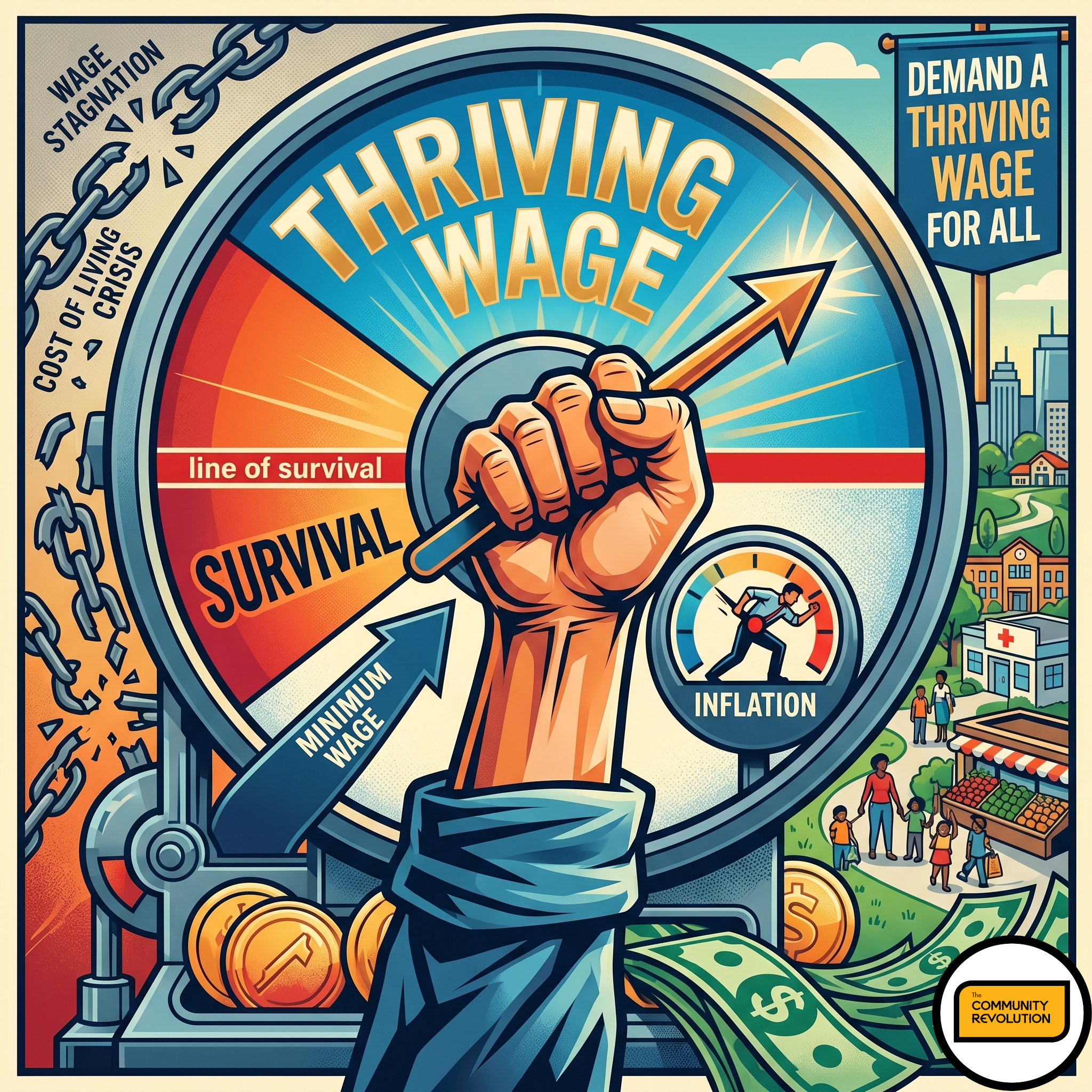
The affordability crisis is the clearest symptom of the ‘Workers Over Billionaires’ economic imbalance. When the cost of housing, food, and energy continues to climb faster than hourly pay, a minimum wage, even where it exists, is not enough. In the UK alone, the immense financial burden of past crises means the government is set to spend around £111.2 billion on debt interest in 2025-26, further proving the failure of the current economic system to protect workers. This is why the first tool is the collective demand for a thriving wage, defined not by political negotiation, but by the true, local cost of living.
This tool is about education and advocacy. First, find out what a genuine living wage is in your community and compare it to the current minimum. Next, join the growing, unified call for policies that mandate a minimum wage tied directly to local affordability indexes. The global May Day Strong initiative provides excellent resources and strategy guides on how workers can coordinate their efforts, whether through collective bargaining or legislative advocacy, to ensure their labour guarantees more than just survival, but prosperity.
Tool 2: Build collective power through organisation
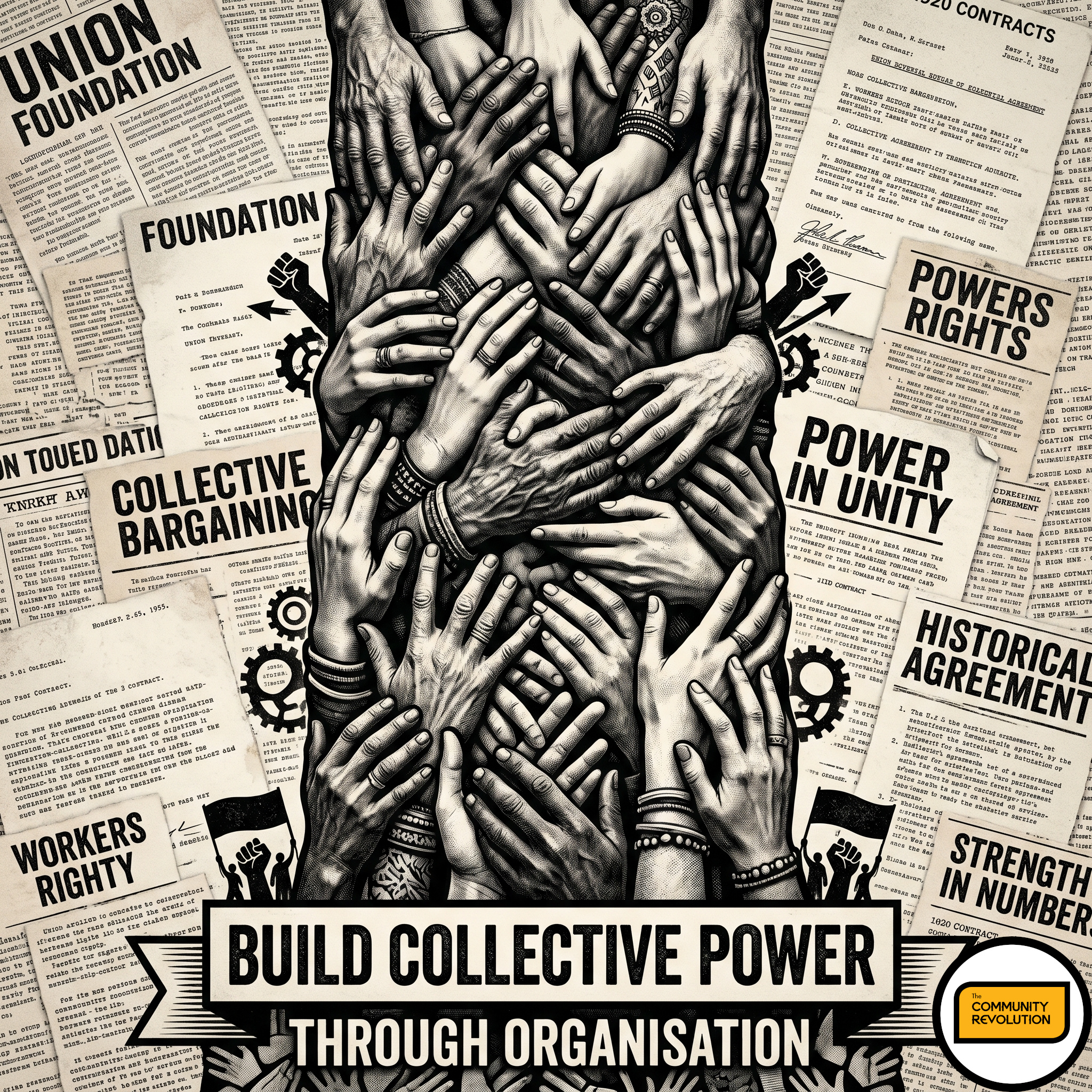
While demanding a thriving wage is vital, the history of successful labour movements proves that no single worker or isolated voice can change an entire system. The second essential tool is the power of collective organisation. True change moves from fragmented action to collective action and deep and durable impact.
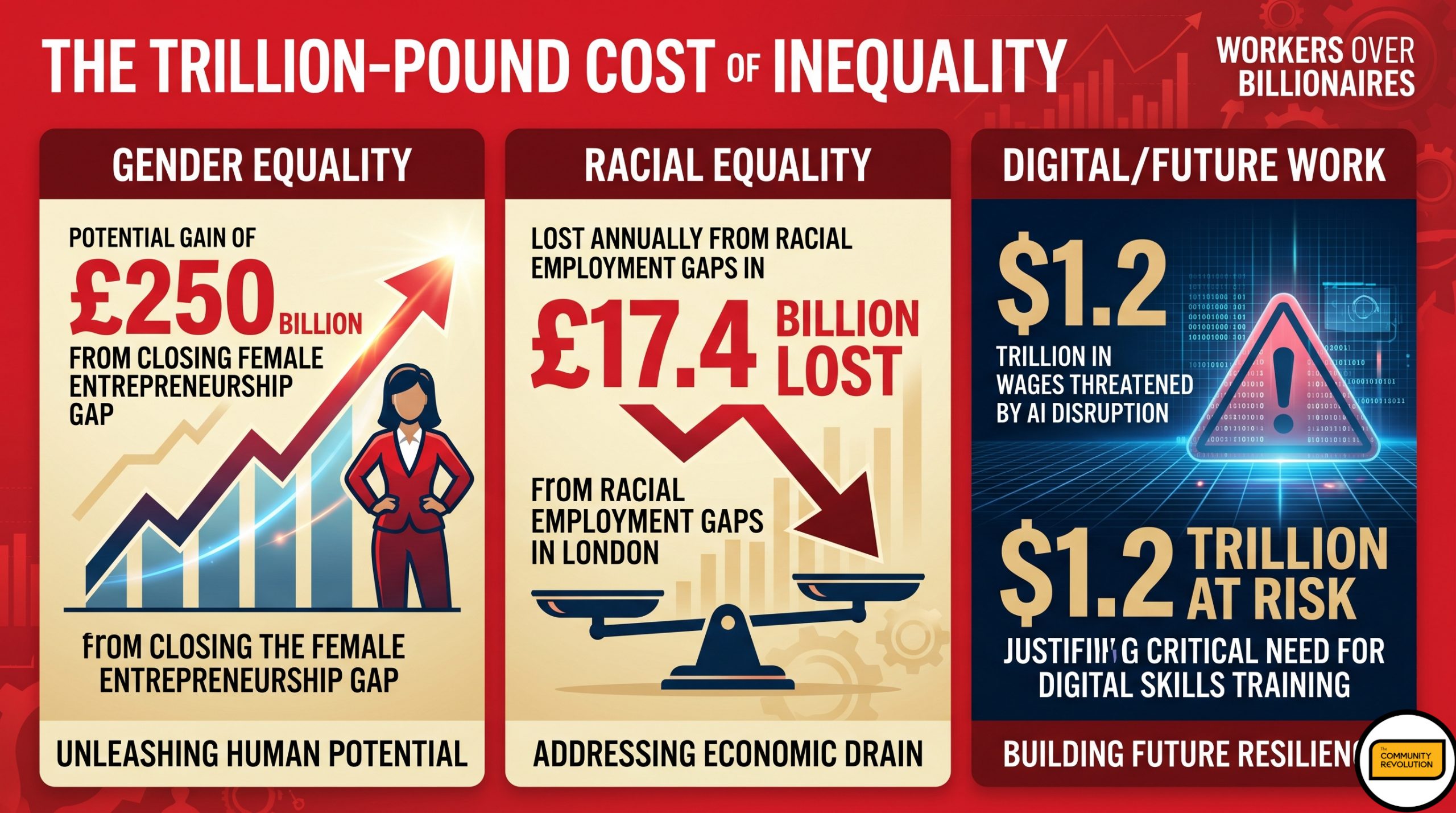
This need for collective action is clearest when looking at the structural advantage of inherited wealth; working-class founders are 3× less likely to access friends-and-family capital compared to privileged peers. This requires shifting from individual complaints to coalition building.
Workers and community members must actively find common ground to push for shared goals, building solidarity across different groups, from your workplace to local policy advocacy, to galvanise collective power. Comprehensive toolkits, such as the May Day Toolkit, offer resources on how to build a team, coordinate local actions, and conduct media outreach, all of which are vital for coalition building.
Building collective power is about developing genuine organising leadership, power-building, campaign or collective action capacity. This is visibly succeeding in many TCR partner geographies, where youth-led, self-organised initiatives are driving momentum and creating spaces for change from the ground up.
Actionable steps:
- Expand Your Network: Don’t limit your focus to your immediate colleagues. Seek to align your goals with wider community groups, social enterprises, and civil society organisations working on similar issues.
- Learn the Terrain: Understand the power dynamics of your local context. As resistance leaders throughout history have shown, knowing who holds power and influence allows you to find pressure points where disruption of the status quo is possible.
- Prioritise Local Organising: Collective action is the process of getting involved in your community and ensuring your voice is heard in decision-making processes. This includes civic participation and movement-building activities.
Tool 3: Secure paid family and medical leave
The fight for economic justice extends beyond the hourly wage; it encompasses the social safety net that prevents working families from falling into poverty when life inevitably requires care. The third tool is the unified demand for mandatory, universal paid family and medical leave. This is fundamentally a gender and social equality issue, as the burden of unpaid care disproportionately falls on women, driving the care economy crisis and reinforcing systemic inequality.
This structural inequality is reflected across the economy; for instance, women-led startups lose ground, dropping from 28% in pre-seed rounds to just 14% at Series B/C, raising proportionally less capital. When a child is born, a parent is ill, or an elderly relative requires support, workers should not be forced to choose between a needed income and a necessary responsibility. The lack of paid leave is a cost to the worker, not the billionaire class. It forces skilled individuals (mostly women) out of the workforce, shrinks economic opportunity, and ensures that wealth remains concentrated at the top.
Actionable steps:
- Make the Case for Investment: Advocate that paid leave is not a benefit, but a necessary public investment in social infrastructure that stabilises the economy and boosts long-term productivity.
- Demand Universality: Push for policies that ensure paid leave is comprehensive, covering family care, personal medical needs, and pregnancy/new-born care, and applies to all workers, regardless of employment type or the size of their employer.
- Join the Advocacy: Seek out and support community-based organisations that are campaigning for legislation on universal paid leave in your region. These efforts directly challenge the notion that care is an individual problem rather than a societal responsibility.

Tool 4: Harness digital literacy for local advocacy
In an increasingly digital economy, the internet has become the main battleground for civic and economic rights. Your fourth tool, therefore, is digital literacy, but reframed not just as a survival skill (filling in a form or booking a doctor’s appointment), but as a powerful tool for advocacy and holding power accountable. Systemic economic inequality thrives in the spaces where knowledge is restricted or confusing.
The need for this skill is urgent: AI already has the technical capability to replace 11.7% of the US workforce, equating to roughly $1.2 trillion in wages. For The Community Revolution (TCR), this means ensuring every worker has the digital skills necessary to thrive, not just survive. Our work, such as the Essential Digital Skills (EDS) Pilot, focuses on equipping multi-barriered learners with the confidence to safely and securely navigate the digital world. This ability to Connect and be Safe online translates directly into fighting the ‘Workers Over Billionaires’ agenda.
Actionable steps:
- Financial Self-Defence: The digital sphere is rife with scams and online financial fraud, particularly targeting vulnerable groups. Economic justice starts with protecting the wages you have earned. Develop skills in financial digital literacy to manage your banking safely and identify common threats, ensuring your wealth is protected from fraudulent schemes.
- Access Government and Council Services: Bureaucratic hurdles are often intentionally confusing. Learn to confidently use online services (e.g., for benefits, housing, or council tax) to ensure you access the essential support you are entitled to, reducing reliance on gatekeepers.
- Amplify Your Voice: Digital platforms are central to modern organising. Mastering secure use of communication tools allows you to join local advocacy campaigns and share your personal story, ensuring the voice of the worker is amplified in policy debates (for example, by supporting a living wage campaign).
- Set Digital Boundaries: Digital empowerment includes the ability to set and maintain healthy digital boundaries and privacy settings. This is crucial for safeguarding personal well-being and ensuring that the pursuit of justice does not come at the cost of personal safety.



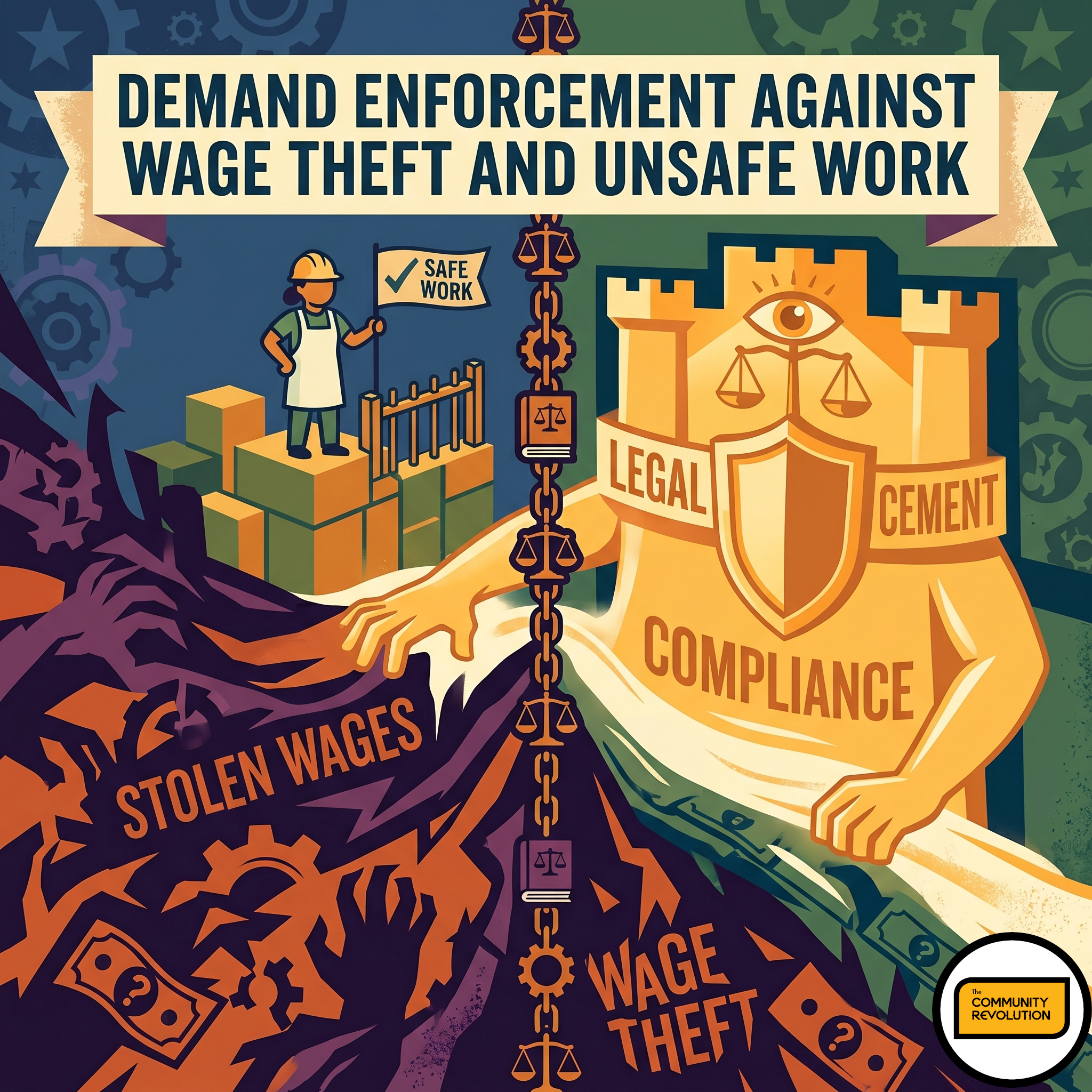
Tool 5: Demand enforcement against wage theft and unsafe work
The final tool is about ensuring the laws already on the books are rigorously enforced. For the ‘Workers Over Billionaires’ agenda to thrive, basic worker protections must be strong, and strongly applied. This is a crucial area for Impact and justice, as non-enforcement disproportionately harms the most vulnerable, including migrant workers and those in precarious employment.
The current breakdown in the justice system is stark: the Crown Court backlog in England and Wales stood at 76,957 cases at the end of March 2025, up from 40,173 at the end of March 2020. Wage theft, a term encompassing everything from not paying minimum wage to refusing overtime pay or mis-classifying employees as contractors, is a multi-million-pound issue worldwide, effectively transferring wealth from the poorest to the richest. Simultaneously, failure to enforce occupational health and safety standards amounts to a direct assault on the health and lives of working people.
Existing legislation is meaningless if it is not enforced. Workers must shift the narrative from asking for new protections to demanding that authorities use their existing power to investigate and prosecute violations.
Actionable steps:
- Know the Signs: Be aware of the common forms of wage theft in your industry, and understand what constitutes a safe working environment according to national or international standards.
- Document Everything: Meticulously record hours, tasks, and payment information. This documentation is your most powerful asset when reporting a violation.
- Report and Follow Up: Report all instances of wage theft or unsafe conditions to relevant regulatory bodies. Crucially, coordinate with colleagues (Tool 2) and local advocates to hold enforcement agencies accountable for timely and thorough investigations.
- Campaign for Compliance: Advocate for increased funding and resources for labour inspectorates to ensure they can adequately monitor compliance across all sectors and employer sizes.
Conclusion and Call to Action
The demand of International Workers Day 2026, Workers Over Billionaires, is a call to rebalance the scales of economic power. By mastering these five tools, you move the fight from an abstract aspiration to concrete, local action. Systemic change does not begin at the top; it starts with empowered individuals, collaborating within their communities, and possessing the skills to advocate for justice.
This is the spirit behind The Community Revolution’s commitment to Empowerment and Learning. Our capacity-building initiatives, such as the Essential Digital Skills Pilot Programme and the Community Financial Capacity Builders project, are specifically designed to equip you with the knowledge needed to secure your rights, protect your wealth, and challenge structural inequality.
We believe your potential is the engine of collective change.
Join the movement for economic justice
Whether you are seeking to gain the digital skills needed for advocacy or want to apply your professional capacity as a volunteer, The Community Revolution provides the space, training, and network for meaningful action.
Visit our website today to find out how you can:
- Enrol in a capacity-building programme, such as the Essential Digital Skills Pilot.
- Volunteer your expertise to support our Impact and justice initiatives.
The power to realise a just and equitable future is in your hands, let’s build it together.