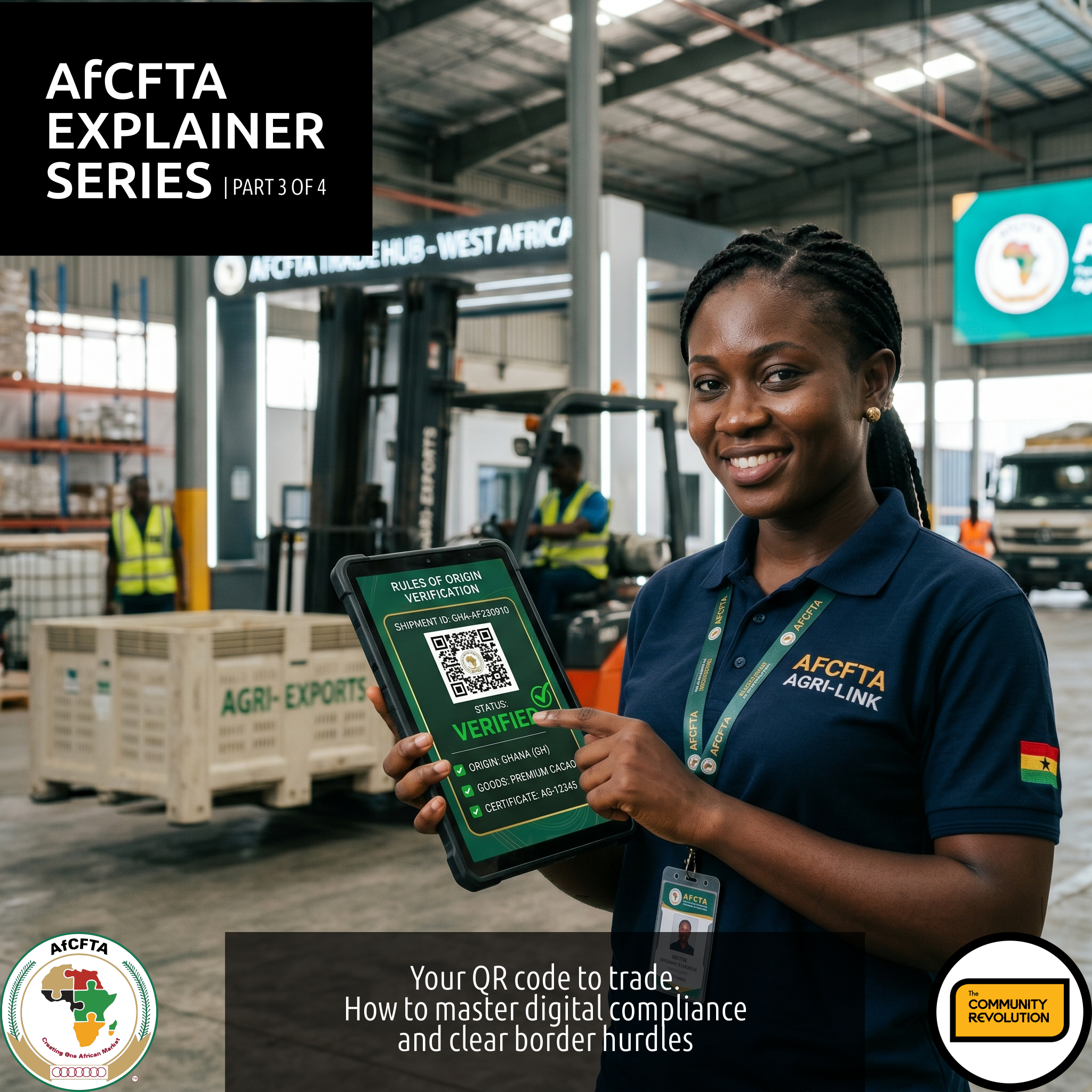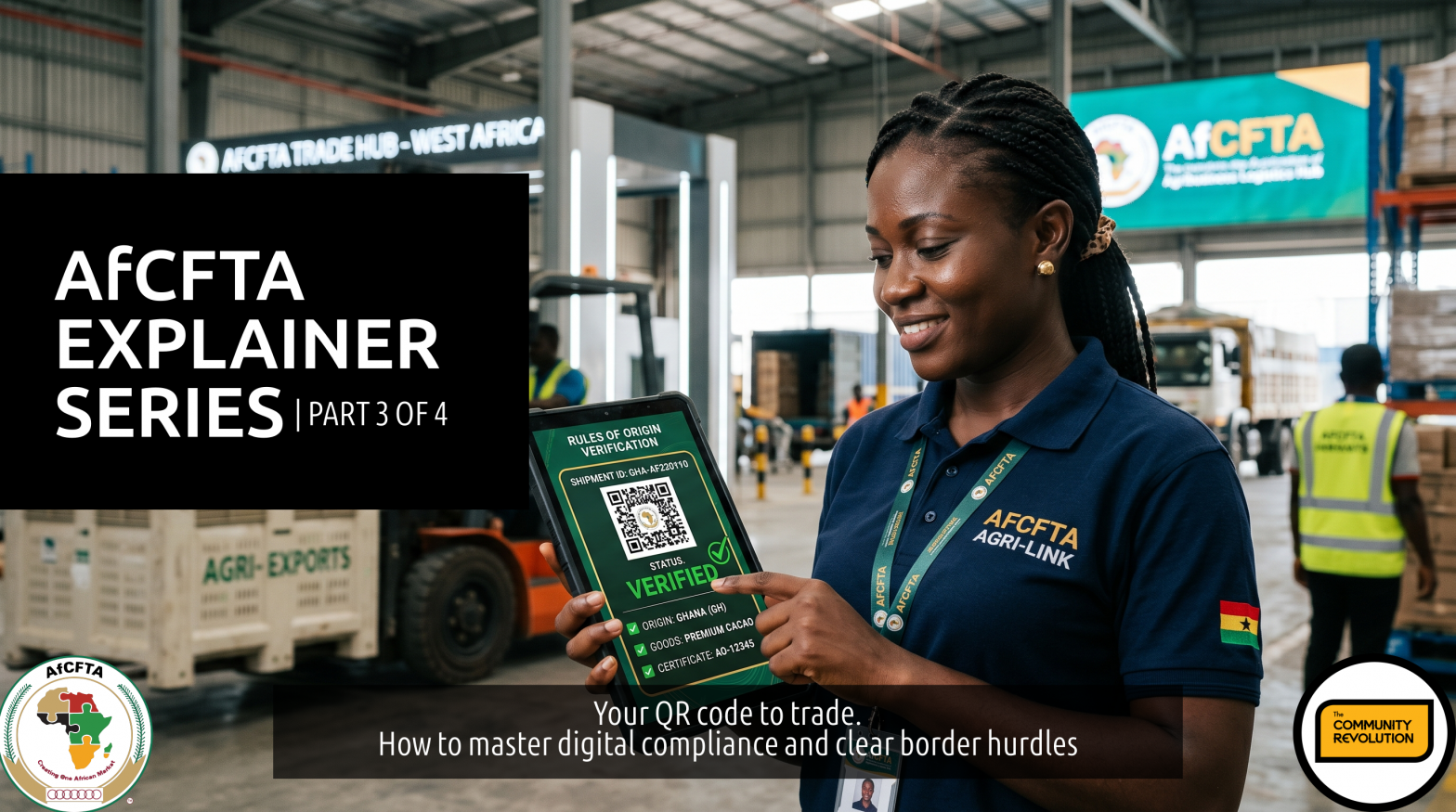
In this third article of our four-part AfCFTA Explainer Series, we focus on digital compliance. In our previous features, we explored the shift to industrialisation and how to reclaim trade margins using PAPSS (the Pan-African Payment and Settlement System, a centralised financial infrastructure established by Afreximbank and the AfCFTA Secretariat to facilitate secure, local-currency payments across the continent). Now, we move to the final piece of the operational puzzle: how to use digital tools to master AfCFTA compliance and clear border hurdles.
Crossing borders should be about moving your goods to where the customers are, not getting stuck in a maze of paperwork. Yet, for many small-scale traders, compliance feels like the biggest barrier to growth.
The good news? The AfCFTA is changing the game. We are moving away from the era of manual, complex legal hurdles and entering the era of digital trade, a journey we began exploring when we looked at the financial tools that make payments easier. Whether you are moving shea butter, textiles, or agricultural produce, there is now a digital toolkit designed to make your journey smoother within the AfCFTA framework.
Here is your step-by-step workflow to master compliance and keep your business moving.
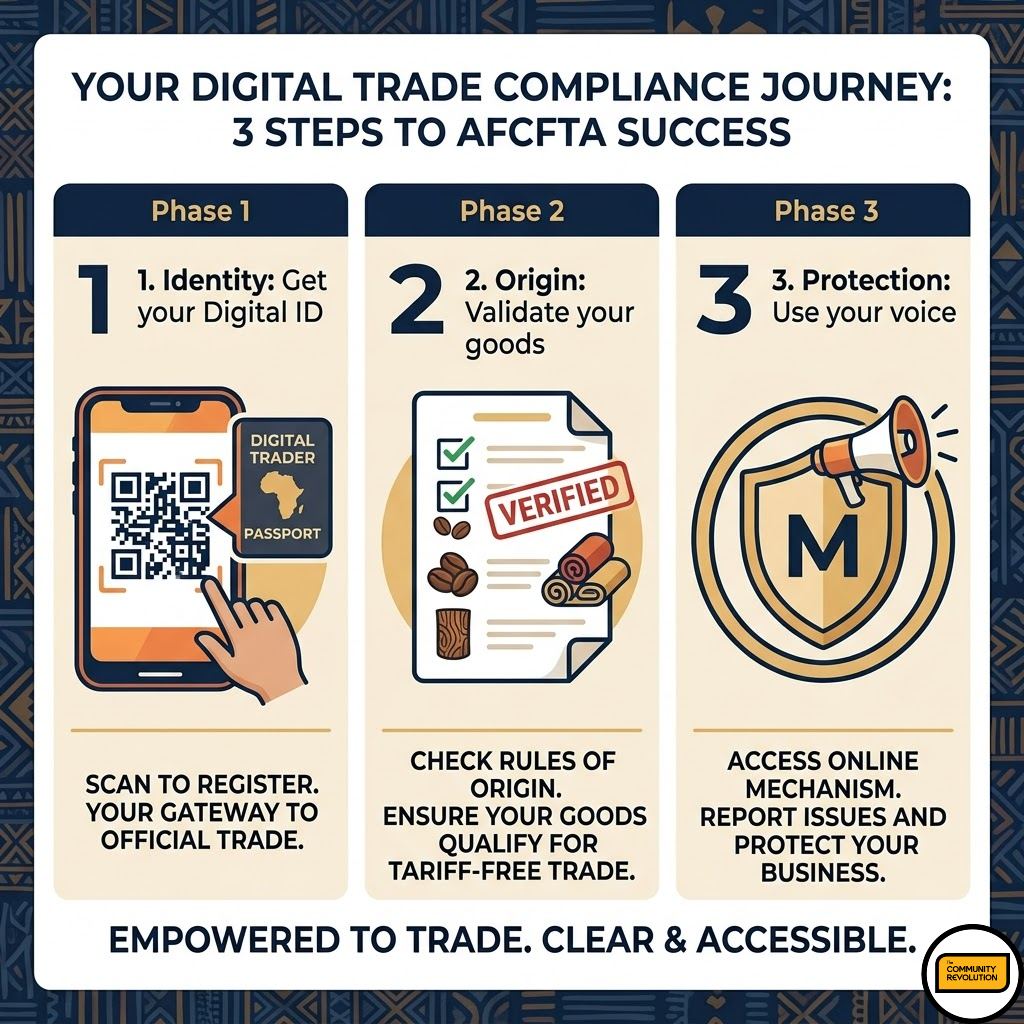
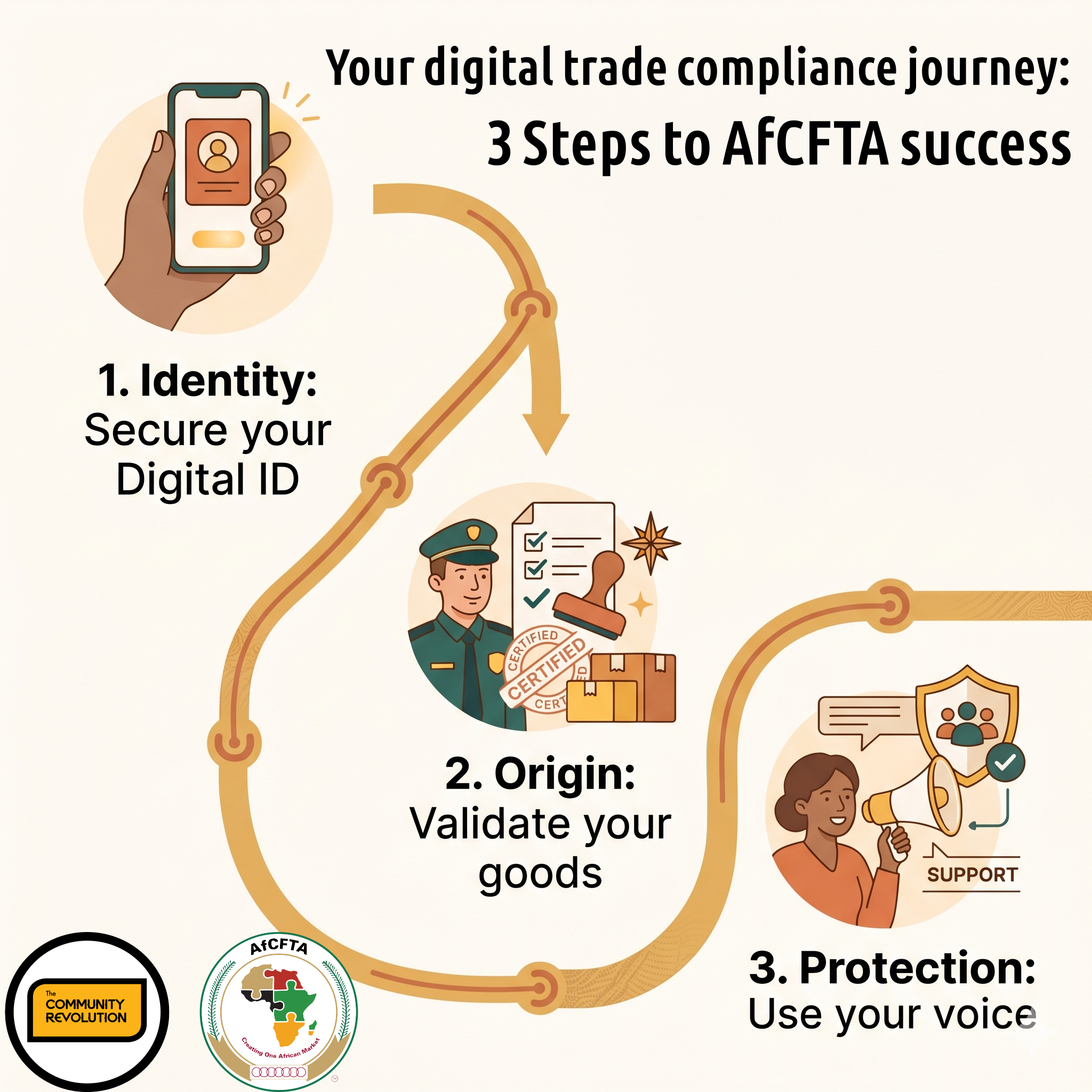
Think of your compliance journey as a three-phase workflow. First, you establish your identity. Second, you prove your product’s origin. Third, you activate your safety net. By following this progression, you move from being a ‘random trader’ to a verified, protected partner in the AfCFTA ecosystem.
Phase 1: Your digital passport
Before you can trade under the AfCFTA, you need to be visible to the system. The new Digital Identity (your QR code) is your gateway.
If you are new to this technology, a QR (Quick Response) code is simply a scannable matrix barcode. When scanned with a smartphone camera, it instantly links to a secure database. Think of your Digital Identity QR code as your ‘digital passport’ for the continent.
To be clear, this does not replace a legal travel passport for immigration; rather, it serves as your business’s verified credentials.
Your digital identity isn’t just a standalone tool; it is a core component of ADAPT (Africa Digital Access and Public Infrastructure for Trade), a continental initiative designed to connect secure identity, data, and finance. This means the system verifying your goods at the border is backed by a robust, pan-African infrastructure built for trust and efficiency, ensuring that your data stays secure as you move your business across borders.
Watch how digital tools are changing the border landscape, then tell us if you are experiencing these changes on the ground in our diagnostic survey
When a border official scans your code, their system instantly pulls up your business profile, verifying you as a legitimate, registered trader within the AfCFTA framework. This ‘fast-track’ status confirms your business credibility, allowing you to bypass manual verification queues because the system already knows who you are.
Think of this as your “digital passport” for the continent. It verifies who you are and signals to border authorities that you are a legitimate, registered trader operating within the AfCFTA framework. Without this digital pass, you are effectively invisible to the automated systems that are being built to fast-track your goods.
If you have not secured your digital identity yet, visit the official AfCFTA Secretariat registration portal to get started. It transforms you from a “random trader” into a recognized partner in continental trade.
Now that you have your digital identity and you are visible to the system, you are ready for Phase 2: the verification of your goods.
Phase 2: Preparing for Rules of Origin compliance
Once you have your digital pass, you need to prove your product is “African enough” to qualify for tariff-free trade. This is where the Rules of Origin come in.
We know that deciphering official manuals can feel like reading a foreign language. But you do not need to be a lawyer to get this right. The key is to start with our Rules of Origin checklist. This process is about verification, ensuring your goods meet the specific criteria set by the Secretariat to qualify for AfCFTA preferences. If you need a refresher on the basics of our AfCFTA framework, head back to our first feature on industrialisation and trade fundamentals.
Stay ahead of the game by preparing your product documentation early. If your goods are locally processed or manufactured, you are already halfway there. Use the current official Rules of Origin manual to ensure your paperwork matches the requirements before you reach the border.
Pro-Tip: Move beyond paper-based record keeping. Keep your core documentation in a dedicated digital folder, readily accessible on your mobile device, to streamline your upload process during Digital ID verification. This simple operational shift prevents ‘document scrambles’ at the border and significantly accelerates your clearance time.
Even with a verified identity and cleared documentation, the trade environment can be complex. That leads us to Phase 3: the safety net you use when reality on the ground doesn’t match the plan.
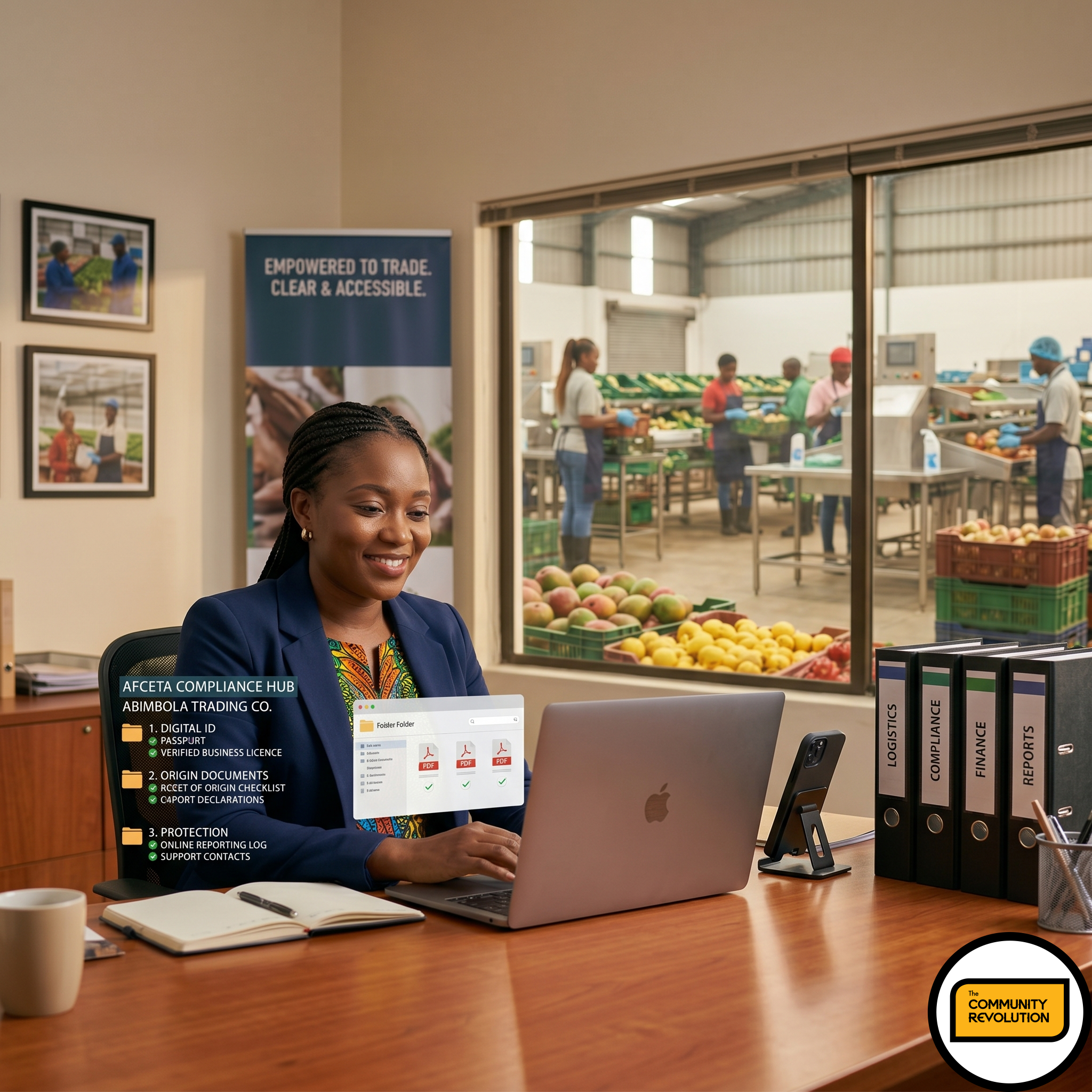
Phase 3: Using the Online Reporting Mechanism as your safety net
Even with the best preparation, trade can be unpredictable. What happens if you do everything right but still hit a barrier at the border?
In the past, you might have felt like your only option was to accept the delay or pay an unofficial fee. Today, you have a voice. The Online Reporting Mechanism is your safety net. It is designed to capture these moments in real-time.
Reporting an issue is not just a support ticket; it is a form of Change Leadership. By documenting your experience, you are proactively driving the systematic changes needed to make trade easier for every trader who comes after you.
When you report a challenge using the official trade barrier reporting tool, you are not just complaining; you are providing data. You are helping the Secretariat to see exactly where the “heavy lift” of implementation is falling short. Reporting an issue is an active contribution to better policy.
If you encounter an unexpected barrier, this mechanism is your primary safety net. Beyond providing immediate support, reporting serves a vital systemic purpose: it allows the Secretariat to identify and resolve bottlenecks in real-time. By documenting your experience, you are contributing the empirical data needed to justify and advocate for necessary policy changes, ensuring your individual challenge helps refine the wider trade ecosystem.
Workflow summary
Your three-step compliance checklist:
- Identity Phase: Secure your Digital ID/QR code to enter the ecosystem.
- Validation Phase: Use our Rules of Origin checklist to qualify your goods for tariff-free trade.
- Protection Phase: Use the Online Reporting Mechanism as your safety net if you encounter a bottleneck.
The future of compliance: making trade simple
Navigating trade rules should not take hours of your day. We know that deciphering official manuals is one of the biggest hurdles you face. The AfCFTA Secretariat has an ambition to make their compliance handbook “AI-ready,” aiming to ensure that trade rules are a facilitator, not a barrier, to your growth.
Imagine being able to ask a simple question, “I am exporting shea butter from Ghana to Kenya, what do I need to prove origin?”, and getting a clear, plain-language answer based on the official rules.
We strongly align with this vision. At The Community Revolution (TCR), we are committed to leveraging technology to make information more accessible and actionable. We believe that innovation must be responsible and human-centric, it should complement your existing knowledge, not replace it. However, for digital tools to truly work, they must be built on a deep understanding of your actual, day-to-day challenges.
Right now, we are mapping the most common compliance ‘headaches’ that traders like you encounter to ensure that upcoming digital trade solutions are genuinely ‘SME-friendly.’ Your experience is the missing link. We are gathering this data for our ongoing Stakeholder Engagement Study (SES), and we want you to be a part of it.
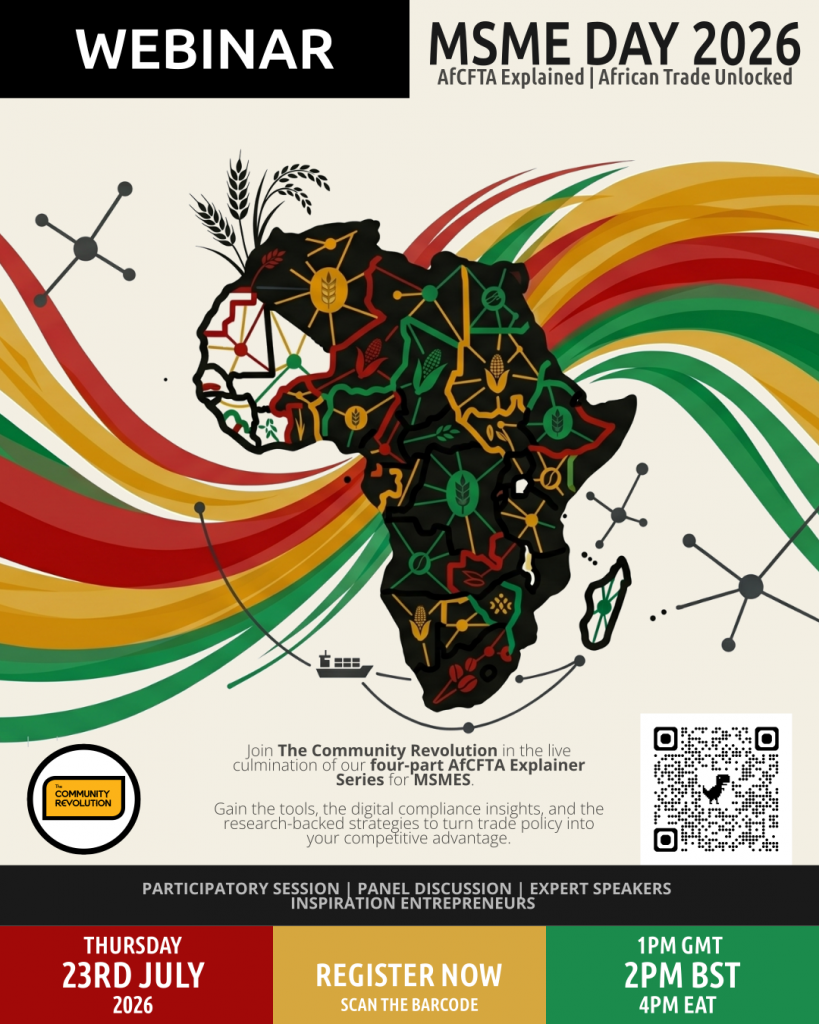
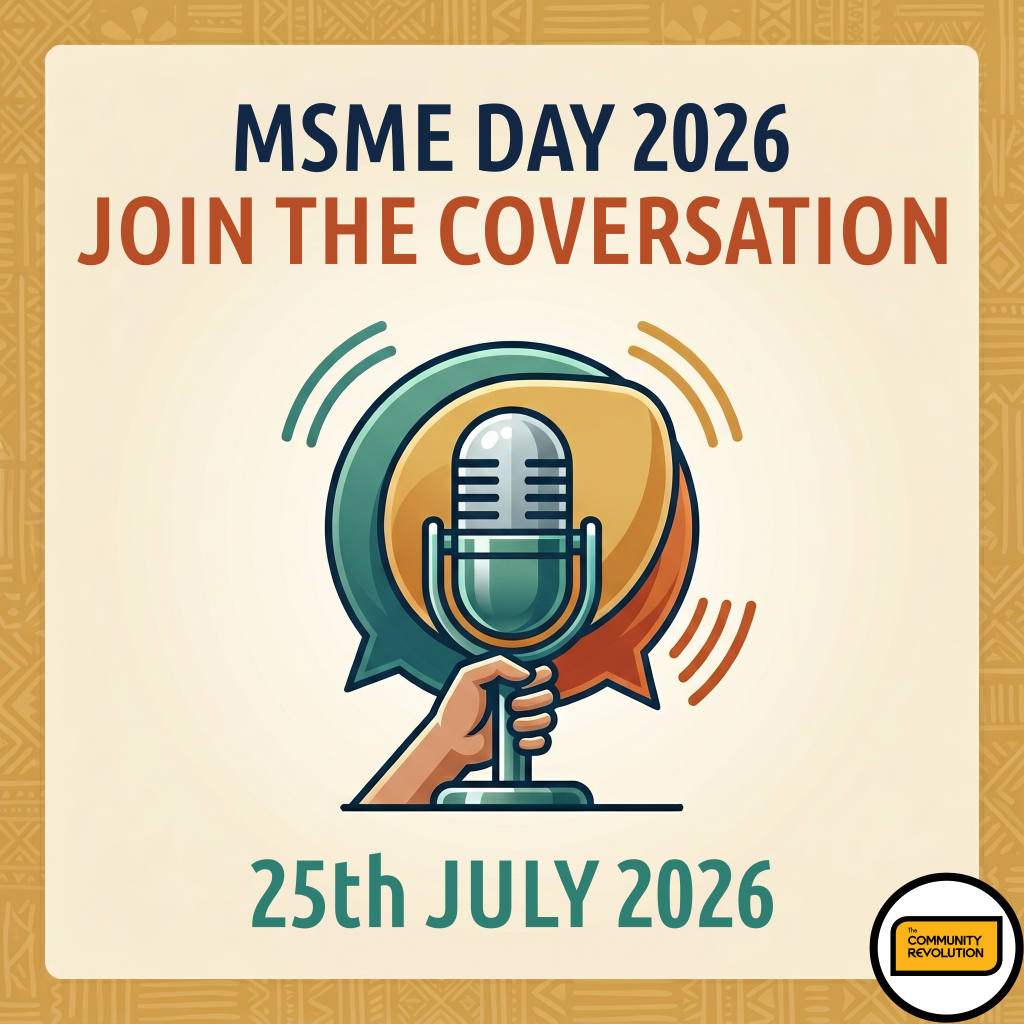
By sharing your specific difficulties during our MSME Day webinar on 23rd July 2026, you are providing the critical data needed to ensure that future digital tools are built to address the real-world barriers you face every day.
Your voice matters: The MSME Day Webinar
We are dedicating our upcoming MSME Day Webinar on 23rd July 2026 to this exact topic. This will be an interactive session designed to bridge the gap between policy and practice.
We are currently finalising a 2-minute pre-webinar diagnostic survey to ensure our panel addresses the hurdles that matter most to your business. By sharing your specific difficulties, you are providing the critical data needed to ensure future digital tools are built to address real-world barriers.
We aren’t just building tools for you; we are co-creating them with you. Your frontline experience is the missing piece of the puzzle.
Register your interest here to receive an early-bird invite to the diagnostic survey as soon as it goes live. Your input will feed directly into our Stakeholder Engagement Study, shaping the future of African trade implementation.
Please note that the webinar will be held on the new date of Thursday, 23rd July 2026.
Full details can be found on the event page.