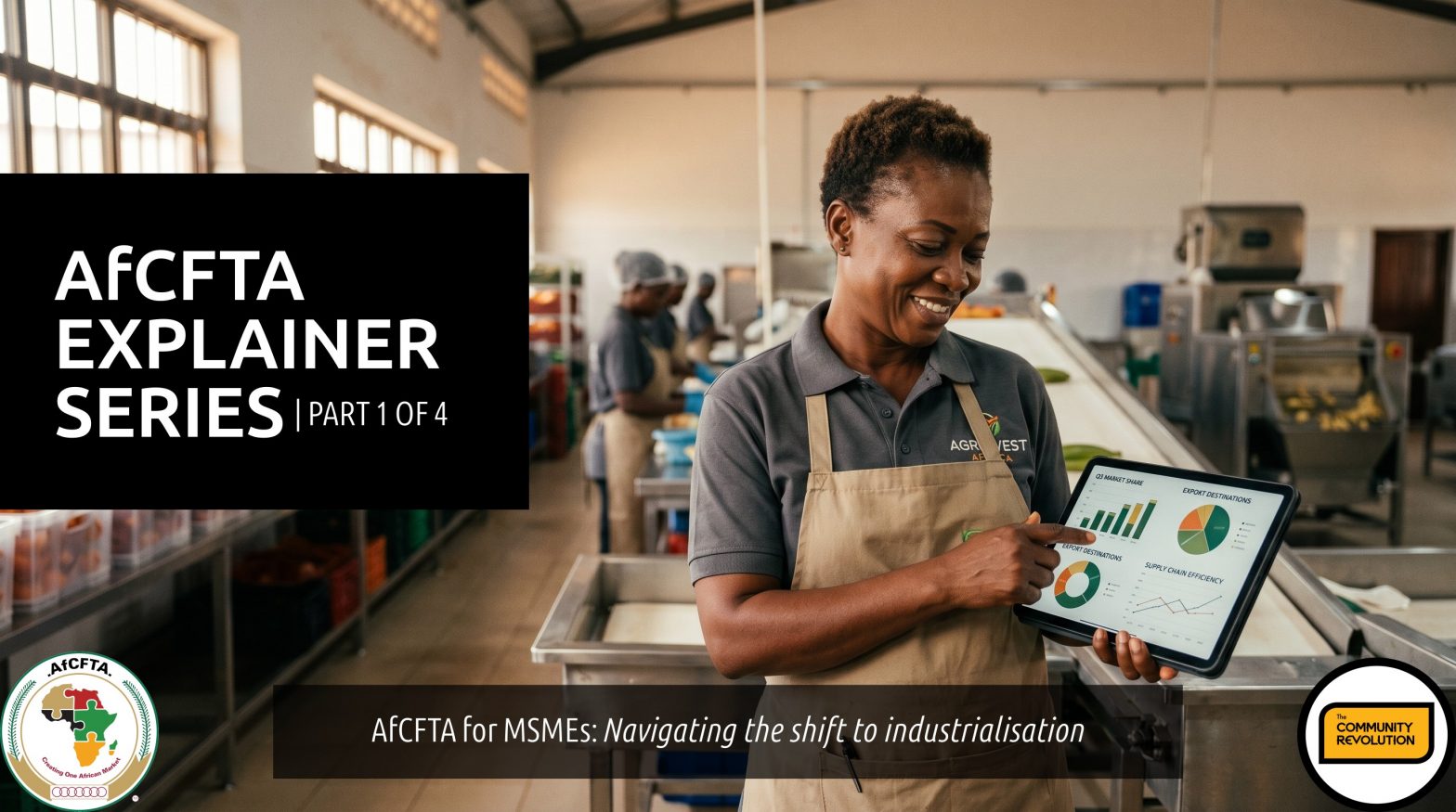
At the border of an unnamed regional trade hub, a local agro-processor is currently manually filing export documents that could take up to 5 days to clear, a system designed, historically, to move raw goods to ports for export to Europe rather than to our neighbours.
The African Continental Free Trade Area (AfCFTA), which entered into force in 2021, is designed to rewire this infrastructure. Its mandate is to move Africa from fragmented, colonial-era trade patterns toward a single, cohesive market.
Across the continent, MSMEs are more than just local businesses, they are the economic engine of our nations, accounting for roughly 80% of employment. When the AfCFTA wins, these businesses win. Understanding this shift is vital, which is why we’re hosting the MSME Day Webinar on 23rd July to discuss how these economic engines can scale in a single market. This article is the first in our four-part AfCFTA Explainer Series, designed to guide you through the transition from policy negotiation to practical implementation ahead of our MSME Day Webinar on 23rd July 2026.
What is the AfCFTA?
The African Continental Free Trade Area (AfCFTA) is a landmark agreement establishing a single, unified market for goods and services across the continent. Now, the continent has confirmed a critical shift: the treaty is moving into the ‘heavy lift of implementation’ and operational reality. As President Ruto recently tasked the Committee: ‘We must make our borders not roadblocks, but stepping stones.’ Our 23rd July webinar will move beyond the policy theory, exploring how we translate that vision into practice to lower trade costs and accelerate delivery.
Officially launched with the objective of creating the world’s largest free trade area, its purpose is to boost intra-African trade, accelerate industrialisation, and stimulate economic growth. By harmonising trade rules and eliminating barriers, it aims to transform how African nations trade with one another, moving away from fragmented markets toward a cohesive economic powerhouse.
This transition signals a change in focus from the ‘why’ of the agreement to the practical ‘how’ it will shape trade and economic development across Africa. The operational phase is concentrating on structural protocols, digital tools, and inclusion mechanisms.
This directly aligns with The Community Revolution’s core mission of sustainable development by tackling the interconnected challenges of digital skills, access to clean affordable energy, and regenerative agriculture.
For MSMEs across the continent (e.g., Ghana, Tanzania, Kenya, Rwanda, The Gambia, and Namibia), this transition provides a validated roadmap for future investment and expansion.
The AfCFTA is not a static event with a fixed ‘go-live’ date. Rather, the transition to an operational AfCFTA is a continuous, iterative rewiring of the continent’s economic infrastructure. A phased rollout of legal protocols, digital tools, and institutional structures designed to integrate markets piece-by-piece.
Who are MSMEs?
Micro, Small, and Medium Enterprises (MSMEs) are the lifeblood of African economies. These businesses, ranging from local agro-processors and independent artisans to emerging manufacturing firms, account for over 90% of all businesses across the continent.
Integrating MSMEs into regional value chains is the difference between an AfCFTA that exists only in boardrooms and one that functions in our markets. By formalising these businesses, we move beyond fragmented, colonial-era trade patterns and towards a cohesive, industrialised market. Empowering these enterprises is the core mechanism for inclusive growth, specifically for the women and youth who lead the majority of these ventures.
The industrial pivot: Scaling our priority sectors
The AfCFTA has officially pivoted from trade negotiation to the heavy lift of implementation, with industrialisation now serving as the continent’s core economic direction. This shift is not merely political; it is a fundamental reorientation of our economic strategy to ensure that African resources create African wealth.
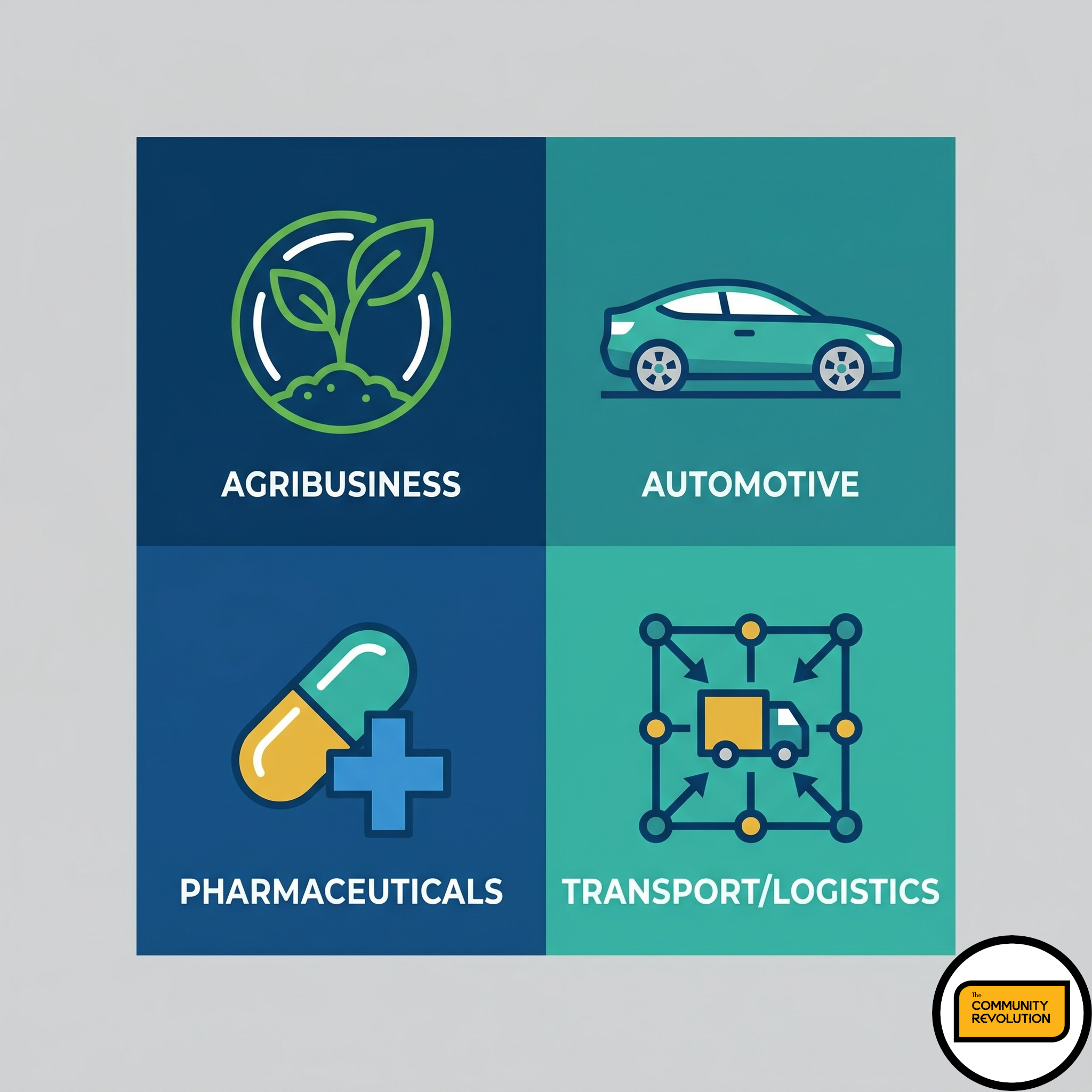
To achieve this, the mandate focuses on four priority sectors, the AfCFTA-4, which represent the most significant opportunities for continental value chain development:
- Agribusiness
- Automotive
- Pharmaceuticals
- Transport/Logistics
By concentrating it’s industrial efforts on these four areas, the AfCFTA moves us beyond fragmented markets toward a single, cohesive economic reality. This is the practical engine of the new industrial policy: transforming raw potential into finished goods, creating stable jobs, and building the infrastructure necessary to make cross-border trade a sustainable reality for every entrepreneur.
The focus on agribusiness is particularly noteworthy, as it aligns with the continental need to upgrade agro-processing, logistics, and quality assurance, given that an estimated 60% of food consumed is currently imported. This targeted sector strategy is crucial for countries like Tanzania and Ghana, which have existing strengths in agriculture but require integration to scale up manufacturing capacity.
Smallholder farmers and cooperatives in the region often struggle to add value to raw produce due to the administrative burden of cross-border trade. Under the new Rules of Origin protocols, these farmers can now prove the regional origin of their goods more efficiently.
Based on strategic trade analysis, applying these refined documentation protocols could reduce manual processing time by an estimated 30 hours per shipment, effectively lowering the cost-to-trade by approximately 15%.
By anchoring our strategy in these priority sectors, we ensure that the transition to a single market delivers tangible results, moving us from exporting raw materials to creating high-value African industries.

The human reality of trade barriers
To understand the necessity of this operational shift, we must first map the barriers that have historically held our MSME traders back (for example, in the case of a small artisan or manufacturer in Kenya who wishes to sell goods into Rwanda).
Trade barriers in Africa currently manifest in three distinct forms:
- Structural Fragmentation: Trade rules and standards are not integrated, forcing traders to navigate different, often opaque compliance frameworks at every national border.
- Logistical Legacy: Much of our transport infrastructure was designed in the colonial era to move raw goods directly to ports for export to Europe or Asia, rather than facilitating trade sideways between African neighbours.
- Financial Friction: High currency conversion costs and fragmented payment systems, resulting in approximately $5 billion in annual forex losses, make cross-border transactions prohibitively expensive for small-scale traders.
These friction points, compounded by high tariffs, are why most African businesses currently trade with countries outside the continent rather than with each other. This is where the AfCFTA implementation phase steps in; it is designed to rewire these routes and eliminate these specific inefficiencies.
Operational tools designed for traders
Implementation is now focused on introducing tangible, structural protocols and digital tools that make trade easier, particularly for MSMEs.
- Pan-African Payment and Settlement System (PAPSS): This tool is designed to mitigate the approximate $5 billion annual forex loss and high transaction costs associated with cross-border trade. By facilitating cross-border digital payments, PAPSS aims to make financial transactions cheaper and simpler for small businesses, removing the need for costly external currencies.
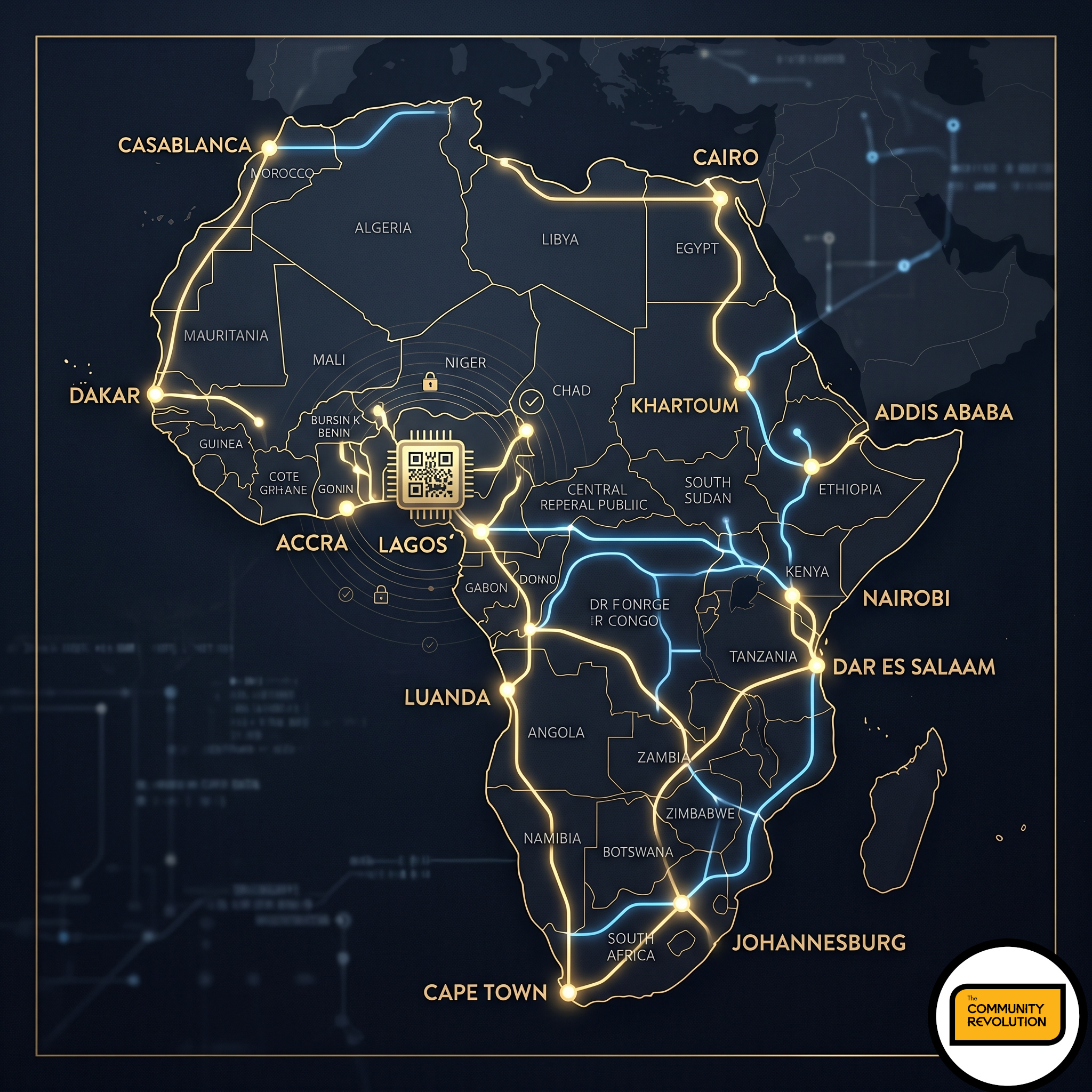
- Digital Identity: To address barriers to the movement of people, a secure digital identity, which may be a card or a QR code, has been created within the digital trade protocol. This offers a low-barrier way for businesspersons to enter cross-border, simplifying travel for entrepreneurs across regions such as The Gambia and Namibia. This digitisation underscores the necessity of The Community Revolution’s work in digital capacity building and CERC-DL (Community Energy Resource Centres for Digital Learning) development, ensuring foundational energy and skills are in place to utilise these tools.
- Clarifying Digital Identity: It is vital to understand that the AfCFTA Digital Identity is not a travel document and does not replace your passport. Instead, it serves as a verified, trusted business credential. For the business traveller, it acts as a digital badge that instantly notifies border authorities that you are a legitimate, AfCFTA-registered businessperson. This helps remove paperwork friction at border crossings while keeping your personal travel identification entirely separate and intact.
- Protocol on Women and Youth in Trade: A first-of-its-kind protocol was developed specifically to address inclusive growth. This legal mechanism includes provisions for access to finance and capacity building, directly targeting MSMEs that are led by women and young entrepreneurs. The Community Revolution actively supports this mandate through partnerships, such as our work with Techness Media Network (TMN) on the Female Educators ICT Empowerment Programme (FEIEP) in Ghana.
- Open Trade Mandate: The new mandate to “open up everything” accelerates free trade, signalling a sharp removal of non-tariff barriers. This also creates a formal demand for technological competence to use digitised trade rules like the AI-enabled Rules of Origin Manual, particularly in areas like sustainable agriculture and renewable energy, which are central to TCR’s focus.
- AfCFTA NTB Online Mechanism: A dedicated portal for reporting, monitoring, and eliminating Non-Tariff Barriers (NTBs). This tool allows MSMEs to formally lodge complaints regarding border delays, ad hoc fees, or restrictive regulations. By documenting these issues at tradebarriers.africa, traders activate a resolution process supported by national focal points and Regional Economic Communities (RECs), ensuring that operational hurdles are systematically addressed rather than ignored.
Navigating the path forward: challenges and opportunities
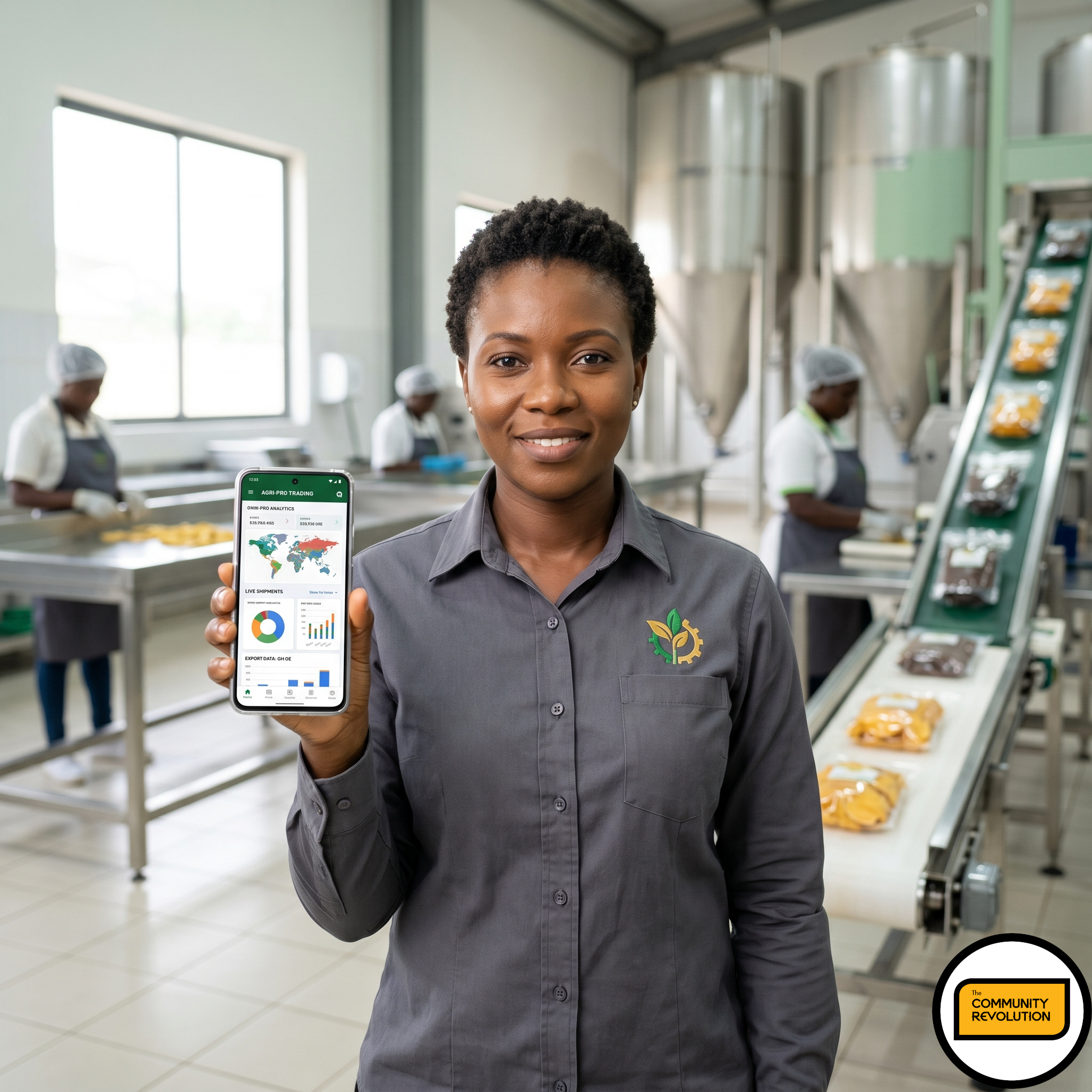
As we navigate this transition, we must be transparent about the friction points. While the AfCFTA digital flowcharts are live, implementation remains a challenge, particularly the need for national-level policy alignment and updated trade regulations. MSMEs also report that digital literacy and connectivity remain primary barriers to adoption.
For entrepreneurs, these hurdles are accompanied by significant opportunities. The industrialisation mandate is creating a formal demand for locally processed goods, encouraging African industries to scale their capacity. Entrepreneurs who invest in quality assurance, digitise their operations, and leverage AfCFTA protocols for access to finance are positioned to be the primary beneficiaries of this new, integrated market.
Ultimately, the success of this implementation will not be measured by the treaties signed in boardrooms, but by the number of MSMEs in hubs like Accra and Dar es Salaam that can efficiently trade with businesses in Nairobi and Kigali. By participating now, businesses are not just reacting to policy, they are actively building the capacity that will define the future of African industry for the next generation.
For a full breakdown of the February industrial mandate and its supporting legal framework, read our foundation analysis here.
Call to action
To begin turning these new operational realities into business opportunities, download our simplified checklist today.
Download the simplified AfCFTA Rules of Origin Checklist to see how the agreement impacts your business today.
About this series
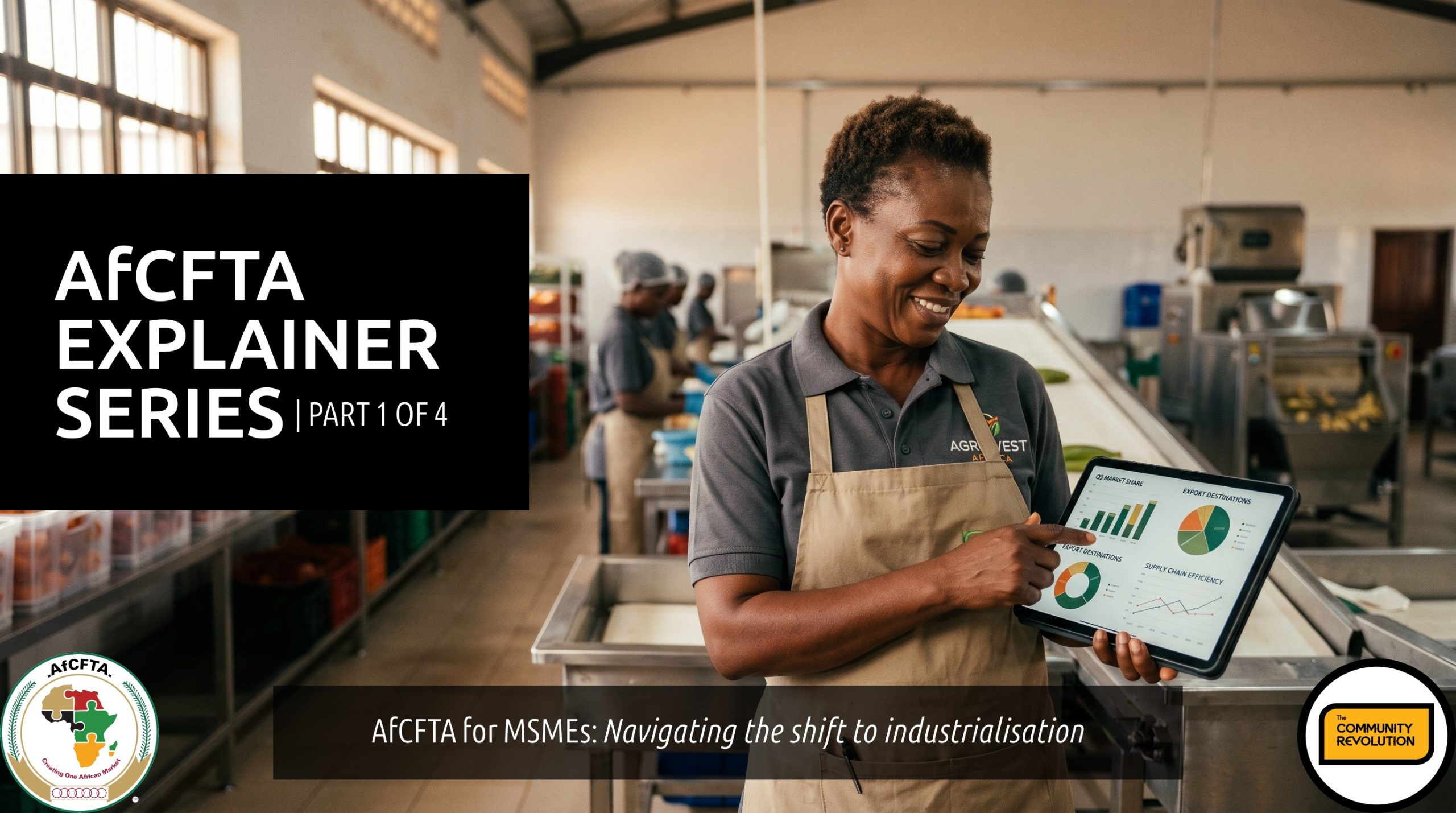
This article is the first in our four-part AfCFTA Explainer Series, designed to guide you through the transition from policy negotiation to practical implementation. Join us as we explore the tools and protocols essential for your business, culminating in our MSME Day Webinar on 23rd July 2026.
What’s coming next:
- Article 2: Reclaiming your trade margins – Discover how the Pan-African Payment and Settlement System (PAPSS) and digital trade tools can help cut your operational costs.
- Article 3: Your QR code to trade – A practical guide to mastering digital compliance and clearing border hurdles.
- Article 4: Access to prosperity – An exploration of why AfCFTA inclusion protocols are a vital catalyst for women, youth, and agribusiness.