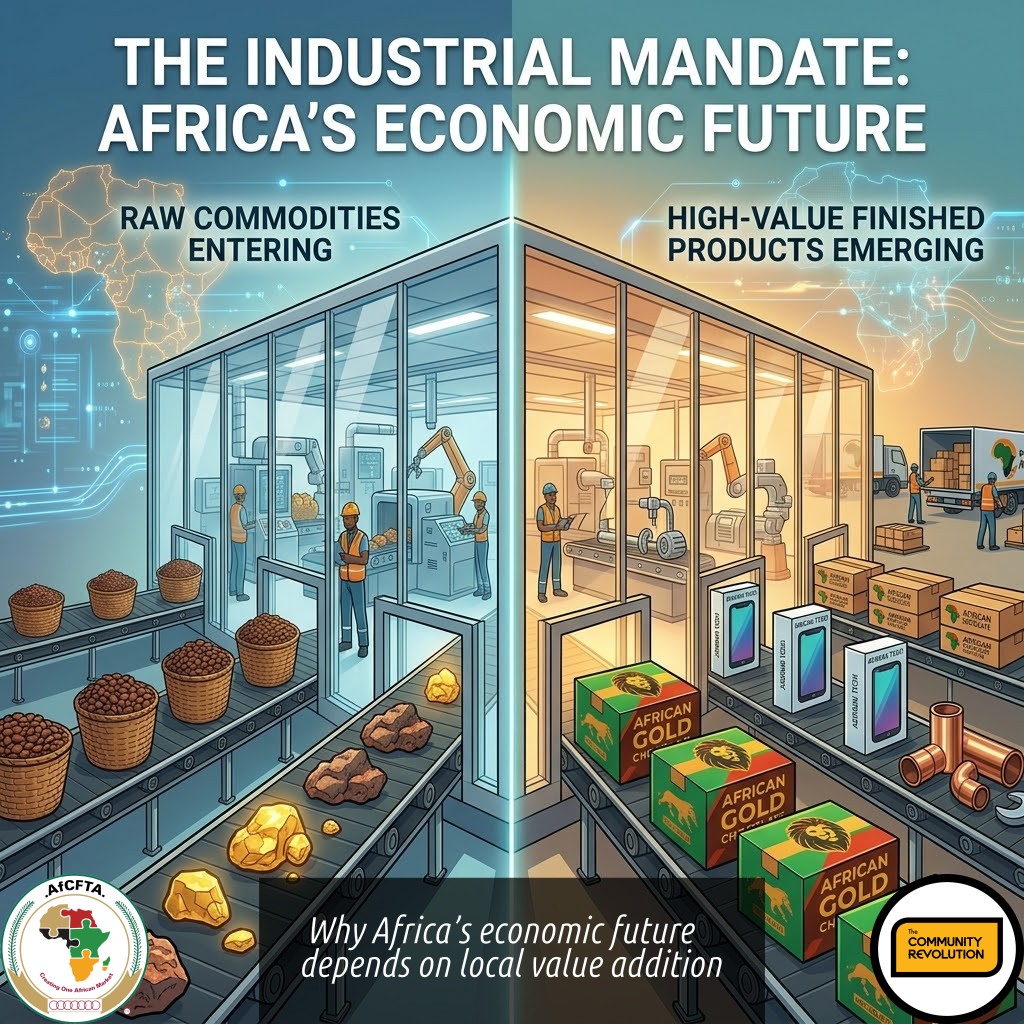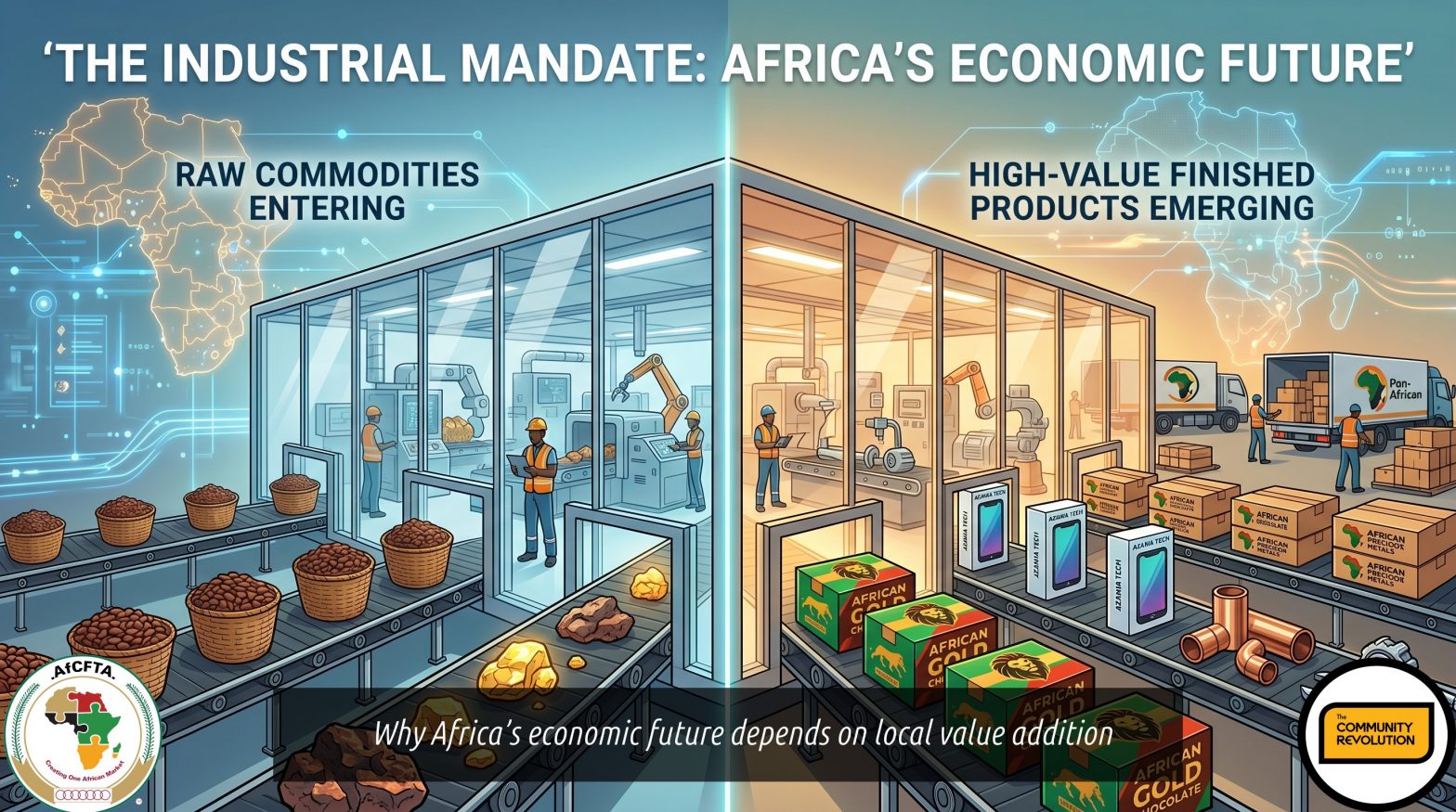
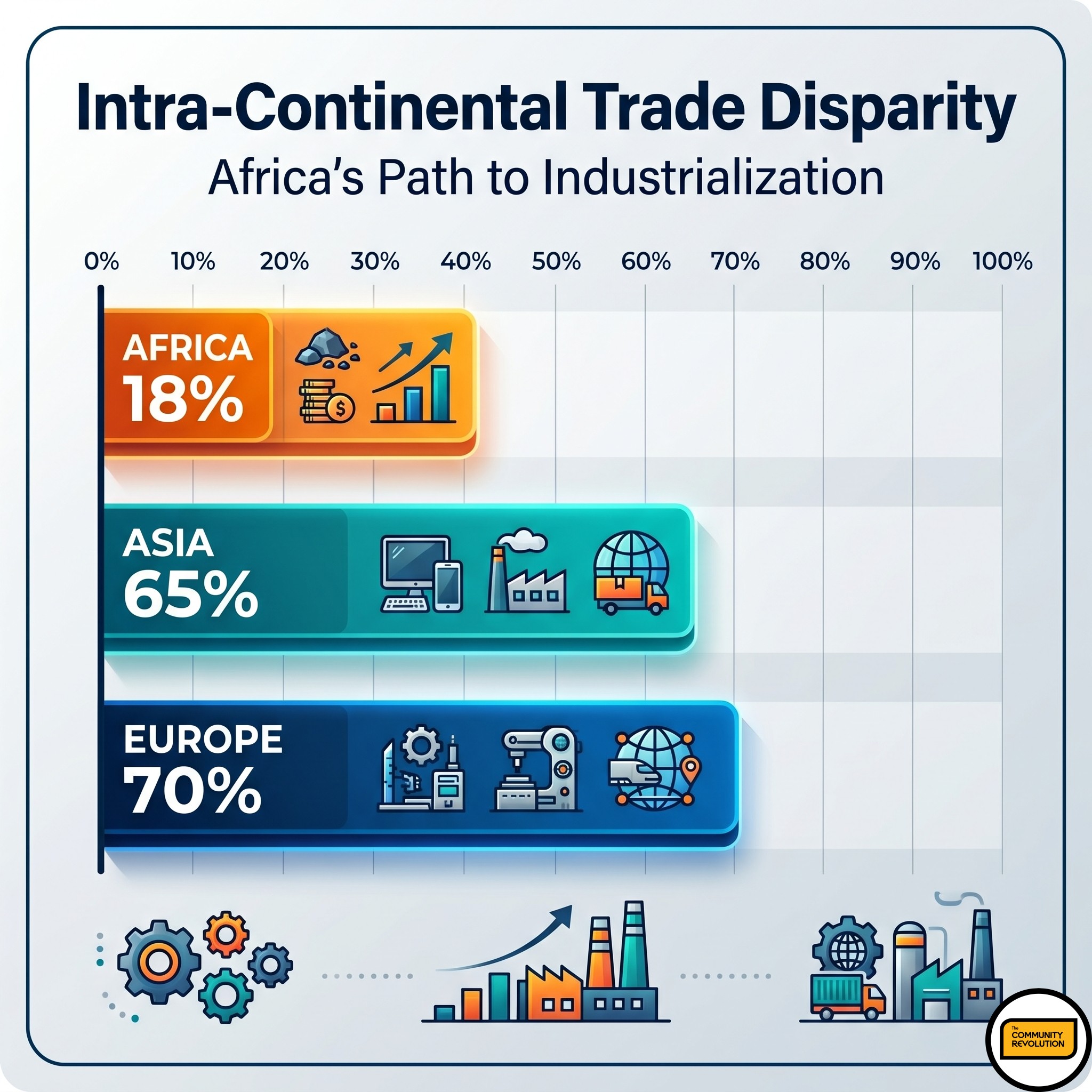
Exporting raw wealth only to import expensive, finished goods is not just an economic inefficiency, it is a cycle that keeps the continent in a state of perpetual dependency. Africa currently trades at only 18% intra-continentally, a stark contrast to Asia’s 65% and Europe’s 70%. As Secretary-General Wamkele Mene noted at the inaugural meeting of the AfCFTA Committee, “There is a crisis that presents an opportunity for us to develop our own market and achieve the economic self-sufficiency we desire.”
On 13 February 2026, the African Union Assembly turned that opportunity into a directive. By tasking the AfCFTA Secretariat to develop a legal instrument on industrial policy, the continent has officially moved to dismantle the “export-only” model. The AfCFTA is no longer merely a trade negotiation framework; it is now an industrialisation roadmap. This decision marks our transition from open-market theory to production-driven growth, setting a clear path toward the economic independence that has long been the goal of our revolution.
What is the AfCFTA?
The African Continental Free Trade Area (AfCFTA) is a flagship project of the African Union’s Agenda 2063, designed to create a single, unified market for goods and services across the continent. Far more than a simple trade agreement, it represents a fundamental commitment to boost intra-African trade, accelerate industrialisation, and stimulate broad-based economic growth. By harmonising trade rules, reducing tariffs, and simplifying customs procedures, the AfCFTA is designed to dismantle the fragmented barriers that have historically hindered connectivity, transforming Africa from a collection of isolated national economies into a cohesive economic powerhouse. This mandate marks a transition from policy theory to operational reality, with the 2026 industrialisation directive serving as the roadmap for this transformation.
The cost of the missing link
The “Resource Paradox” is not merely an economic theory; it is a lived reality for millions of MSMEs. When an agribusiness cannot access cold-storage, it loses a significant portion of its harvest to spoilage before it ever reaches a market. When a producer extracts raw cocoa, they earn pennies for the material, while the finished chocolate product, manufactured abroad, is sold back at ten times the price.
This infrastructure gap acts as a permanent ceiling on growth. By failing to complete the value chain locally, we remain captive to global price volatility. The new mandate acknowledges that trade liberalisation is insufficient without a corresponding industrial base. We must build the capacity to add value on our own soil, turning raw potential into refined prosperity.
Breaking the infrastructure barrier
For too long, the conversation around infrastructure has been fragmented, treating essential services as isolated utilities rather than interconnected systems. A road that leads nowhere is a cost, not an asset. A power grid that cannot support processing plants is a barrier to entry, not a utility. As President William Samoei Ruto, Chair of the Committee, clearly stated, “We must make our borders not roadblocks or impediments, but stepping stones and bridges so we can trade better.”
The new industrial mandate provides the leverage to resolve these gaps by prioritising integration. We are already seeing the future of this shift in emerging hubs where decentralised, sustainable energy solutions, such as solar-powered micro-grids, are enabling local processing facilities to operate 24/7, independent of unreliable national infrastructure. Similarly, our work in food systems proves that when we secure the value chain, from harvest through to local processing, we do more than increase yield; we capture the value that was previously lost to post-harvest waste. By aligning these sectors, the AfCFTA Secretariat can coordinate national efforts into a continental standard, ensuring that food produced in one region can be processed using sustainable energy sourced from another, creating a truly resilient industrial base.
The demographic engine
Our greatest asset is not a mineral deposit or a seasonal crop; it is our young, growing population. However, this is only a strategic advantage if we provide the tools to catalyse their potential. MSMEs form the backbone of this potential; in Kenya, for example, the MSME sector accounts for close to 80% of all employed persons.
The “factory of the future” will not replicate the heavy-industry models of the 20th century. It will be powered by digital tools, agile innovation, and a commitment to equity. The industrial mandate must be more than a top-down directive; it must be a platform accessible to the informal trader as much as the multinational firm. By focusing on technical training and digital literacy, we can ensure that the next generation of African entrepreneurs, the youth who are already innovating in our tech-hubs, are not just participating in the market, but are the ones owning the production and shaping the standards.
Opening the continent
The shift from fragmented markets to a single, cohesive economic reality is the ultimate goal. When we remove the barriers to intra-continental trade, we unlock sectors that were previously unviable. We move from competing for external buyers to collaborating for internal demand.
Agribusiness, pharmaceuticals, and automotive industries can thrive only when they have a market of 1.4 billion people at their fingertips. This industrial mandate provides the legal framework to secure those pathways. It fosters an environment where innovation is rewarded, entrepreneurship is supported, and sustainable development becomes the standard, not the exception.
Conclusion
The adoption of the industrial mandate is a milestone that transforms the AfCFTA from a policy ambition into a tangible economic engine. The transition from trade theory to production-driven growth is now underway, and for us, this is the beginning of a larger revolution.
As President Ruto urged the Committee, “Let us match the promise of the AfCFTA with decisive action to move from fragmentation to scale, potential to productivity, and policy to shared prosperity.” As policy observers and stakeholders, our role is to remain vigilant and proactive. We must ensure that the legal instruments developed by the Secretariat prioritise equity, dismantling the barriers that have historically kept small-scale producers on the margins. The AfCFTA is the framework, but industrialisation is the goal. Africa’s economic future depends on our ability to reclaim our value chains and produce right here, at home.